

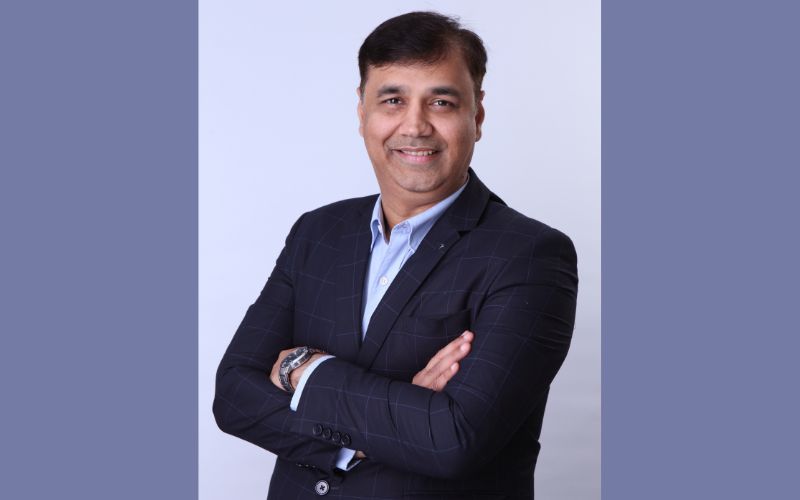
“India has the opportunity to become a larger manufacturing base for both domestic and global markets. But achieving that ambition will require more than investment announcements. It will require infrastructure that enables businesses to execute those investments quickly and efficiently.” Dr. Yogesh Bhatia, MD & CEO, LML Realty
India’s manufacturing ambitions are entering a new phase. As the country looks to deepen domestic value addition, strengthen supply chains and attract investment across sectors, the question is no longer simply how much manufacturing capacity India can create, but where that capacity will be built.
For decades, established industrial centres have been the natural choice for manufacturers, offering mature ecosystems, supplier networks, skilled talent and strong connectivity. But rising land costs, congestion and limited availability of expansion-ready industrial land are prompting businesses to look beyond traditional hubs. This is where Tier II cities and emerging industrial locations could play a defining role in India’s next manufacturing wave.
The economics of manufacturing are changing
For a manufacturer, the cost of land is only one part of the location equation. The larger consideration is the total cost and time involved in becoming operational.
Emerging industrial locations, particularly those connected to major economic corridors, can offer businesses access to larger parcels of land, more efficient costs and greater room to scale without necessarily compromising access to markets.
This is particularly relevant for India’s MSMEs. As smaller businesses move from being local suppliers to becoming larger participants in domestic and global value chains, their infrastructure requirements are changing. They need facilities that can support expansion, comply with evolving standards and connect efficiently with customers and suppliers.
The opportunity, therefore, is not simply to make industrial land available. It is to create industrial infrastructure that makes growth easier.
Connectivity is redefining industrial geography
One of the biggest advantages historically enjoyed by established industrial clusters has been connectivity. That advantage is gradually becoming more distributed.
The expansion of highways, expressways, freight networks and multimodal infrastructure is opening up new industrial corridors and reducing the distance between emerging locations and major consumption or production centres.
For locations around major economic hubs, this creates an interesting proposition. A manufacturer does not necessarily need to be located inside a metropolitan industrial cluster if it can access the same markets through reliable road and logistics networks while benefiting from more efficient land economics.
This is particularly relevant to the Delhi-NCR region. As industrial land within established clusters becomes increasingly constrained, the next generation of manufacturing capacity can naturally move towards emerging locations that offer connectivity to NCR while providing greater room for industrial development.
Industrial parks need to become ecosystems
A plot of land by itself does not create a manufacturing ecosystem. Businesses require roads capable of handling industrial traffic, reliable utilities, drainage, security, logistics support and other supporting infrastructure.
This is why the evolution of industrial parks is important.
Our experience in developing in industrial park at Jhirka Valley has reinforced our belief that an industrial park must be planned around the operational requirements of businesses rather than simply around the subdivision of land.
The 45-acre development is positioned along the Delhi-Mumbai Expressway corridor and is designed to support MSMEs and manufacturers across sectors including engineering, automotive, logistics, pharmaceuticals, food processing and textiles.
The larger lesson is that emerging industrial locations can become competitive when location advantage and infrastructure advantage come together.
MSMEs could be the biggest beneficiaries
India’s manufacturing story will ultimately depend on the ability of MSMEs to expand. A large manufacturing ecosystem is rarely built by large companies alone. It requires component manufacturers, ancillary units, logistics providers, engineering firms and specialised suppliers operating alongside larger enterprises.
Emerging industrial locations can provide the space for these businesses to grow together. But for many entrepreneurs, establishing a manufacturing facility can involve multiple layers of complexity from identifying land and securing approvals to designing the facility, arranging utilities and managing construction.
This is also why models such as built-to-suit factories are gaining relevance. At LML Realty, we recently introduced a model that integrates land, construction, statutory approvals and project execution under a single engagement, with facilities designed around the specific requirements of the manufacturer.
For MSMEs, such models can help shift the focus from managing the process of building a factory to actually running the business.
Policy and infrastructure must move together
The emergence of new industrial locations also highlights the importance of alignment between policy and infrastructure.
Government incentives can influence where businesses choose to invest, but incentives alone cannot create sustainable industrial growth. They need to be supported by physical infrastructure, connectivity and an ecosystem that allows enterprises to put those incentives to work.
The notification of LML Industrial Park, Jhirka Valley as a Prime/Focus Area under Haryana’s Progressive MSME & Export Promotion Policy 2026 is an example of how policy support can complement industrial infrastructure.
The next advantage could be readiness
India has the opportunity to become a larger manufacturing base for both domestic and global markets. But achieving that ambition will require more than investment announcements. It will require infrastructure that enables businesses to execute those investments quickly and efficiently.
This is where Tier II and emerging industrial locations can make a difference.
The winning locations will not simply be those with cheaper land. They will be those that combine connectivity, infrastructure, policy support, ecosystem development and speed of execution.
From our experience, we believe the future of industrial real estate lies in moving from providing plots to creating environments where businesses can operate, expand and remain competitive over the long term.
India’s next manufacturing wave may therefore not be defined by the expansion of its biggest industrial cities. It could be defined by the rise of the locations around them, emerging industrial destinations that give manufacturers something increasingly valuable: the infrastructure, space and flexibility to build for the next decade of growth.
The author is Dr. Yogesh Bhatia, MD & CEO, LML Realty
