

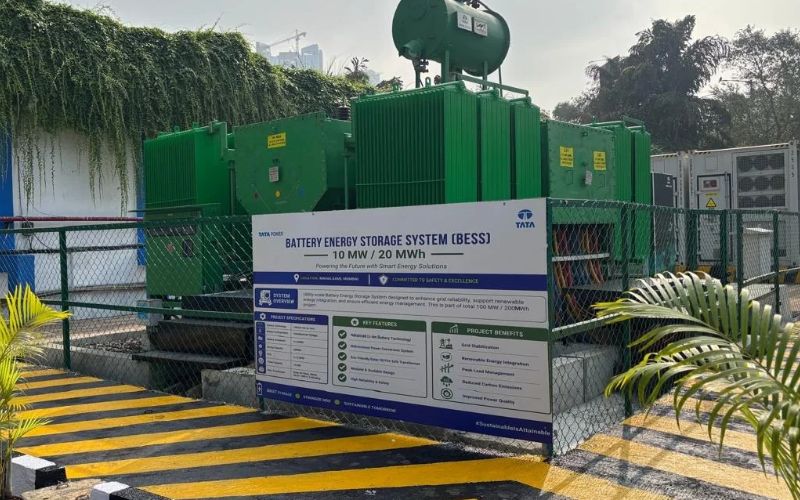
“The installations enhance the flexibility and resilience of Mumbai’s power network by storing electricity during lower-cost solar hours and discharging it during evening peak demand. This energy arbitrage capability enables efficient energy utilization, optimizes power purchase costs and reduces dependence on expensive peak-hour electricity.”
Tata Power is strengthening Mumbai’s electricity distribution infrastructure which serves over 8 lakh consumers with 60 MWh of operational Battery Energy Storage Systems (BESS) across Mahalaxmi, Saki and Mankhurd.
The installations enhance the flexibility and resilience of Mumbai’s power network by storing electricity during lower-cost solar hours and discharging it during evening peak demand. This energy arbitrage capability enables efficient energy utilization, optimizes power purchase costs and reduces dependence on expensive peak-hour electricity.
Equipped with fast-response and high ramp-rate capabilities, the systems support dynamic load management, enabling the distribution network to respond swiftly to fluctuations in demand. Operating at approximately 1–1.5 cycles per day, the installations support effective peak load management and power procurement optimization. Their grid-connected, decentralized deployment enhances localized energy storage and dispatch capabilities, while black-start functionality supports grid restoration during power system disturbances.
The operational installations build on Tata Power’s larger vision to modernize Mumbai’s electricity infrastructure. In April 2025, the company received approval from the Maharashtra Electricity Regulatory Commission (MERC) to deploy a 200 MWh BESS across 10 strategic locations in Mumbai.
The larger initiative is designed to strengthen grid stability, optimize peak demand, improve reactive power management and support faster restoration of power supply to critical infrastructure, including hospitals, Metro services, airports and data centres.
