


“Building a manufacturing and technology company in India requires a deep understanding of local market needs and a commitment to solving indigenous problems with indigenous solutions. This lesson—that a strong foundation is built on persistence and a willingness to evolve is what allows a deep-tech company to not only survive but thrive and achieve market leadership.” Agnishwar Jayaprakash, Founder & CEO, Garuda Aerospace
Garuda Aerospace has successfully balanced rapid expansion with sustained profitability in a capital-intensive sector, clocking a notable ₹110 crore in revenue and ₹16 crore in profit in FY24. What is your strategic formula for this success, and how do you plan to scale this model while maintaining profitability as you look towards your vision for FY25–26?
Garuda Aerospace’s strategic formula for successfully balancing rapid expansion with sustained profitability in a capital-intensive sector is multifaceted, centered on a diversified business model and relentless operational efficiency. The company has moved beyond mere drone manufacturing to a comprehensive Drones-as-a-Service (DaaS) model, which includes drone rentals, pilot training, and after-sales support. This strategy provides multiple, high-margin revenue streams, cushioning the capital-intensive nature of hardware manufacturing. To scale this model while maintaining profitability, the company plans to leverage its new facility to increase production volume, thereby reducing the per-unit cost of manufacturing. Furthermore, they will expand their network of trained pilots and service centres across India, ensuring they can serve a larger client base in key sectors like agriculture and logistics without compromising on service quality. This approach allows for a scalable yet financially disciplined growth trajectory towards the FY25-26 vision.
“The increased manufacturing capacity is a strategic move to meet the rising demand both domestically and internationally, positioning Garuda Aerospace as a key player in the global drone market while reinforcing India’s capabilities as a hub for advanced manufacturing.”
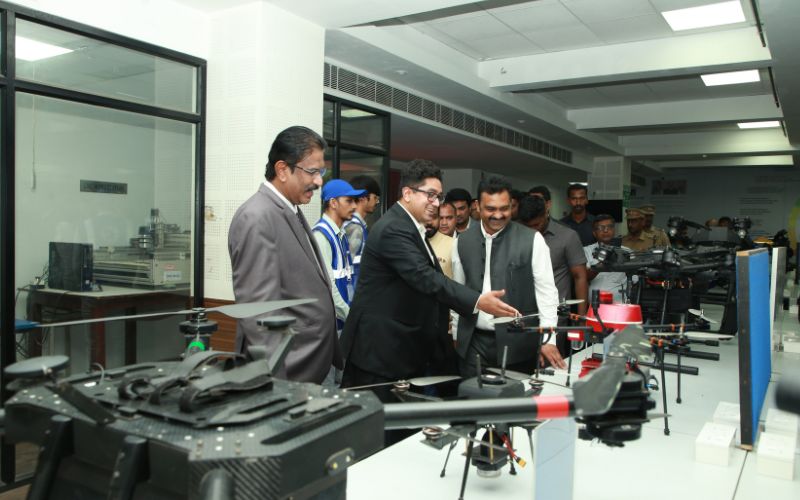
The inauguration of your new state-of-the-art product development and manufacturing facility is a significant milestone. How does this facility strengthen Garuda Aerospace’s commitment to ‘Make in India’, and what are your specific manufacturing plans for new drones, particularly in a landscape where global competition and supply chain complexities are a constant challenge?
The inauguration of Garuda Aerospace’s new product development and manufacturing facility significantly strengthens the company’s commitment to the ‘Make in India’ initiative. By consolidating research, development, and manufacturing under one roof, the facility enables a high degree of vertical integration and indigenization. This reduces dependence on foreign suppliers for critical components, mitigating global supply chain complexities and ensuring a robust, self-reliant manufacturing ecosystem. The company plans to utilize this state-of-the-art facility to produce a new generation of drones, including advanced models for agricultural spraying, logistics, and surveillance. The increased manufacturing capacity is a strategic move to meet the rising demand both domestically and internationally, positioning Garuda Aerospace as a key player in the global drone market while reinforcing India’s capabilities as a hub for advanced manufacturing.
“The strategy for establishing a strong international footprint involves forming strategic partnerships with local distributors and service providers, which helps in navigating regional regulations and provides a strong support network for clients.”
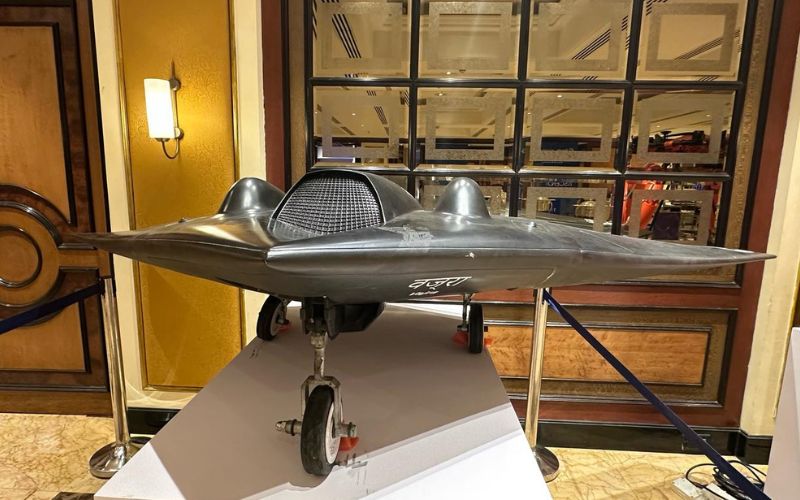
You have articulated a clear plan for global market expansion. Can you share the journey so far, from securing an export license to your recent entry into key international markets like the U.S., Australia, and the Middle East? What specific market demands are you targeting, and what strategies are you employing to establish a strong international footprint?
Garuda Aerospace’s journey towards global market expansion has been a methodical and strategic process. The first critical milestone was securing the necessary export licenses, which opened the door to international markets. The company is targeting the precision agriculture sector, leveraging its specialized drones for crop health monitoring and spraying, which aligns with the high-tech farming practices in these regions. In the Middle East, the focus is on drones for oil and gas infrastructure inspection and security surveillance. The strategy for establishing a strong international footprint involves forming strategic partnerships with local distributors and service providers, which helps in navigating regional regulations and provides a strong support network for clients. This phased approach ensures sustainable growth and a tailored market-entry strategy for each new territory.
“Garuda Aerospace is actively focused on partnership with the army and Govt. Agencies. These partnerships aim to tailor drone technology to specific operational requirements, such as border surveillance, intelligence gathering in challenging terrains, and delivering essential supplies to remote outposts.”
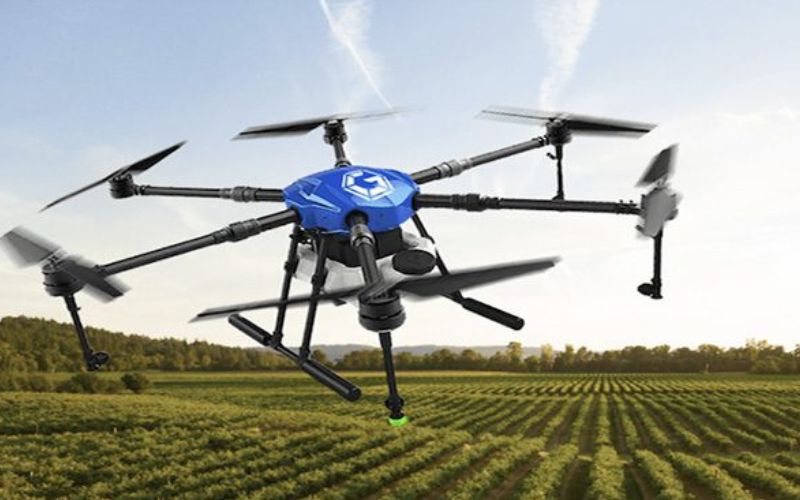
Drones are becoming a critical asset for defence and security. Can you elaborate on Garuda Aerospace’s role in this domain? What kind of collaborations are you pursuing with defence organizations, and how do your offerings align with the needs of modernizing India’s defence capabilities?
Drones are an increasingly critical asset for modern defence and security, and Garuda Aerospace has a significant role in this domain. The company has developed a range of specialized drones for military and paramilitary applications, including high-end surveillance, reconnaissance, and logistics support. These offerings are designed to align with the needs of modernizing India’s defence capabilities by providing advanced, indigenous technology that enhances situational awareness and operational efficiency. Garuda Aerospace is actively focused on partnership with the army and Govt. Agencies. These partnerships aim to tailor drone technology to specific operational requirements, such as border surveillance, intelligence gathering in challenging terrains, and delivering essential supplies to remote outposts. The company’s commitment to self-reliance in this critical sector is a key component of its national security contribution.
“Investor confidence in the Indian drone sector is at an all-time high, driven by supportive government policies, increasing commercial applications, and the sector’s clear growth trajectory.”
With a clear roadmap for the future, what are your plans for investments and future funding, particularly for FY25–26? How do you view investor confidence in the Indian drone sector, and what is your strategy for attracting strategic capital that aligns with your long-term vision?
Garuda Aerospace’s future funding and investment plans for FY25-26 are focused on attracting strategic capital that aligns with the company’s long-term vision of becoming a global leader in the drone industry. The company plans to engage in a new funding round to fuel its expansion efforts, including the scaling of its new manufacturing facility and the establishment of a wider international presence. Investor confidence in the Indian drone sector is at an all-time high, driven by supportive government policies, increasing commercial applications, and the sector’s clear growth trajectory. The company’s proven profitability, with a notable ₹16 crore profit in FY24, further boosts this confidence, providing a strong case for attracting strategic investors who bring not just capital but also valuable industry expertise and market access. The strategy is to find partners who share the company’s vision and can help accelerate its growth sustainably.
“As an entrepreneur who has built a deep-tech company from conceptualization to market leadership in India, the single most important lesson I have learned is the absolute necessity of resilience and adaptability.”

You have had a remarkable journey as an entrepreneur. What is the one key lesson you have learned about building a deep-tech company in India—from conceptualization to market leadership—that you would share with aspiring entrepreneurs in the manufacturing and technology space?
As an entrepreneur who has built a deep-tech company from conceptualization to market leadership in India, the single most important lesson I have learned is the absolute necessity of resilience and adaptability. The journey is filled with unforeseen challenges, from technology development hurdles to navigating complex regulatory landscapes. Success is not about having a perfect initial plan but about the ability to quickly pivot, learn from failures, and innovate in response to market feedback and changing circumstances. Building a manufacturing and technology company in India requires a deep understanding of local market needs and a commitment to solving indigenous problems with indigenous solutions. This lesson—that a strong foundation is built on persistence and a willingness to evolve is what allows a deep-tech company to not only survive but thrive and achieve market leadership.
