
“Steel is one of the few materials that can be recycled infinitely without losing its strength or quality. That makes it not only the backbone of industrial growth, but also of sustainability. India today consumes around 42 million tonnes of scrap annually, and this figure is rising by over 6% year-on-year. Nearly 9 million tonnes of scrap is imported into the country every year.” Vinaya Varma, Managing Director, mjunction services limited
“Sustainability is no longer optional but strategic.” Syed Jawed Ahmed, Executive Director, SAIL
“While government capex is driving 60% of steel usage, India’s young and growing population is also generating demand.” Girishkumar Kadam, Senior Vice President & Group Head, Corporate Sector Ratings, ICRA
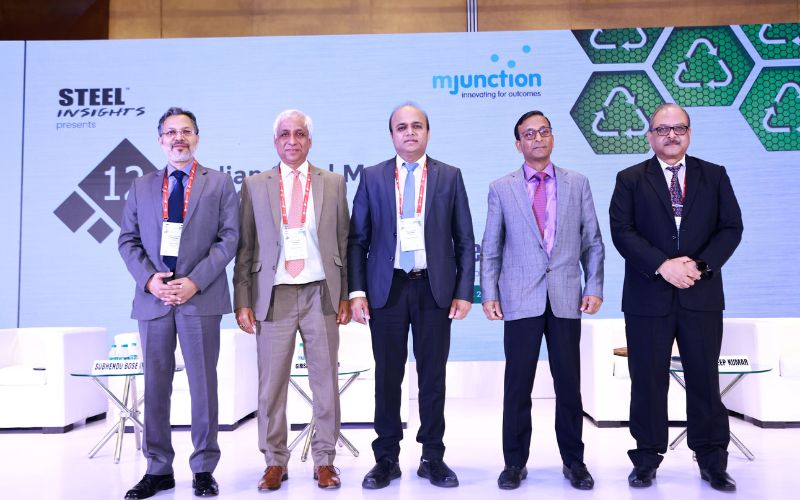
Steel scrap is emerging as the key input for green steel, speakers at the 12th Indian Steel Markets Conference said. “Steel is one of the few materials that can be recycled infinitely without losing its strength or quality. That makes it not only the backbone of industrial growth, but also of sustainability. India today consumes around 42 million tonnes of scrap annually, and this figure is rising by over 6% year-on-year. Nearly 9 million tonnes of scrap is imported into the country every year,” Vinaya Varma, Managing Director, mjunction services limited said at the opening session of the two-day 12th Indian Steel Markets Conference organized by mjunction services limited.
In line with global concern of decarbonizing the steel sector, theme of the conference this year is the “Indian Steel Value Chain – Recycle. Reshape. Innovate. Sustain.”
“Sustainability is no longer optional but strategic,” said, Syed Jawed Ahmed, Executive Director, SAIL detailing how the public sector company is embracing sustainability and creating capabilities to meet evolving green steel norms.
Sourcing scrap remains a key concern for India as demand for steel continues to rise.
“While government capex is driving 60% of steel usage, India’s young and growing population is also generating demand,” Girishkumar Kadam, Senior Vice President & Group Head, Corporate Sector Ratings, ICRA, said.
As steel demand and production rises, the sector is facing raw material sourcing challenges.
Import of coking coal is going to be expensive in long run while aggressive bidding for iron ore mines is driving up domestic iron ore costs, according to Sandeep Kumar, Vice President, Raw Materials, Tata Steel.
Beyond decarbonization, the conference seeks to deliver deep insights into the volatile global and domestic landscape, critical policy shifts, evolving trade dynamics, and the imperative for sustainable practices that are reshaping the industry and driving the dialogue on India’s ambitious steel growth trajectory.
