

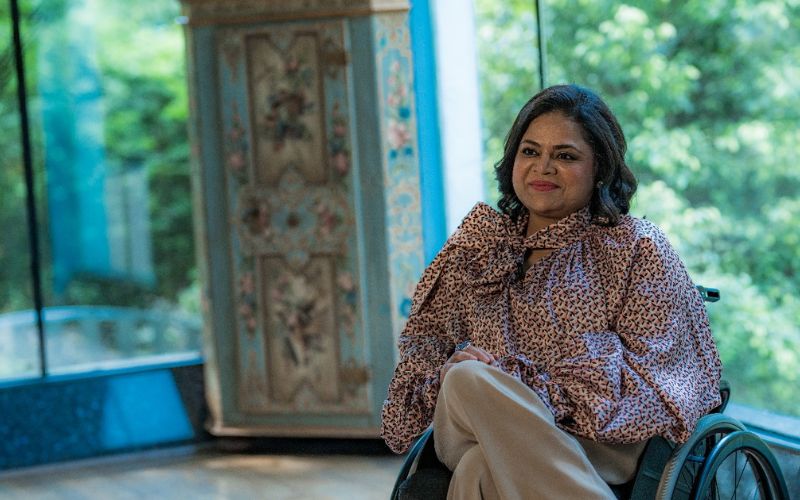
“Rehabilitation is far beyond just medical intervention; it is a path to dignity, self-sufficiency, and equality. If there has to be progress, accessibility needs to be interwoven into every component of the healthcare ecosystem. When environments and systems are designed for inclusion rather than exclusion, we empower people toward regaining their independence and fully participating in society.” Sminu Jindal, Founder-Chairperson of Svayam and MD, Jindal SAW Ltd.
The Artificial Limb Centre in Pune recently organized a day-long seminar on Rehabilitation Education featuring leading experts, medical professionals, and policymakers for a day of detailed deliberations on ways to strengthen India’s rehabilitation ecosystem keeping persons with reduced mobility like soldiers with mobility impairments in mind. The day-long event was attended by Brig. C. N. Satish, Sminu Jindal, Founder-Chairperson of Svayam and MD, Jindal SAW Ltd., and Col. Rohit Tandon with the inaugural address being given by Surgeon Vice Admiral Arti Sarin, Director General Armed Forces Medical Services, who stressed on the ever-increasing requirement for integrated rehabilitation frameworks and importance of collaboration across institutions.
The seminar consisted of four dedicated sessions, each to address the various dimensions of rehabilitation. The sessions organized were on ‘Contemporary Issues in Rehabilitation’ that highlighted the emerging challenges of patient care, technology adoption, and skilling; ‘Orthopedics and Rehabilitation’; ‘Disabilities of the Upper Limb’ and ‘Holistic Rehabilitation: A Multispeciality Approach’ that brought into perspective the importance of inter-disciplinary coordination to ensure long-term and sustainable rehabilitation outcomes.
Emphasizing the larger objective of rehabilitation, besides being a societal duty to make systems more inclusive, Sminu Jindal, Founder-Chairperson of Svayam and MD, Jindal SAW Ltd. stated, “Rehabilitation is far beyond just medical intervention; it is a path to dignity, self-sufficiency, and equality. If there has to be progress, accessibility needs to be interwoven into every component of the healthcare ecosystem. When environments and systems are designed for inclusion rather than exclusion, we empower people toward regaining their independence and fully participating in society.”
The Seminar concluded with an interactive high-tea session where participants, experts, and dignitaries could share their ideas, explore potential collaborations, and reflect on best practices that meaningfully strengthen rehabilitation efforts throughout the country. Svayam has been at the forefront of discussion on accessibility, from sports and tourism to travel, infrastructure, and transport, and has worked continuously to create systemic changes.
Svayam has been continuously working towards accessible mobility in all sectors including sports, tourism, travel, infrastructure, healthcare and transport. It is committed to building an environment and opportunities that will enable persons with reduced mobility to live a safer and a more empowered life.
