

“The knowledge we gain together will help strengthen the European circular economy. In addition, we can apply the insights we acquire in our own journey toward green steel, in which we will increasingly use scrap for the production of high‑quality steel.” Dr. Radhakanta Rana, Metallurgist, Tata Steel Nederland
“It’s very important for Volvo Cars to understand if, and how, a higher recycled content is influencing the steel’s behaviour. This project is of high value for us since it will verify that this assumption holds for the investigated steel grades in the forming process. Also, if we see differences with a higher recycled content, we will learn how to adapt to these changes.” Dr. Johan Pilthammar, Engineering Technical Specialist at Volvo Cars.
“Electrolux Professional remains wholly committed to reducing the climate change impact of our industrial operations. Steel is a key material in our production process and exploring innovative ways of introducing a greater level of circularity is of significant strategic importance to reducing our upstream Scope 3 emissions.” Andrea Caputo, Sustainability Director BA Laundry, at Electrolux Professional
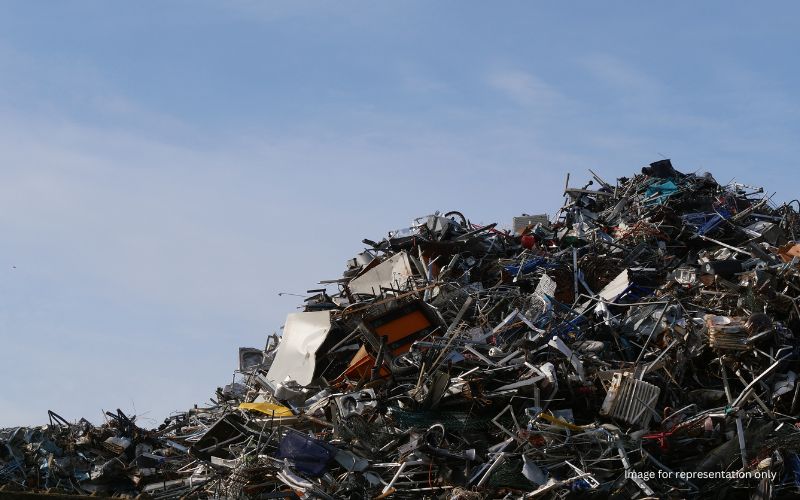
Tata Steel Nederland is taking part in the European research project CiSMA (Circular Steel for Mass Market Applications), which aims to develop high‑grade steel types made entirely from recycled scrap and produced using Electric Arc Furnaces (EAF). Dr. Radhakanta Rana, Metallurgist at Tata Steel Nederland, is involved in the project as a researcher and explains: “The knowledge we gain together will help strengthen the European circular economy. In addition, we can apply the insights we acquire in our own journey toward green steel, in which we will increasingly use scrap for the production of high‑quality steel.” A key research goal of CiSMA is to achieve a 70% overall reduction in CO₂ emissions in sheet steel production through the use of 100% scrap and EAF technology. Using 100% scrap in steel production is not yet a realistic scenario and depends on many factors, such as the availability of scrap. However, participating in this research provides valuable insights for producing high‑quality steel that contains 30 to 40% scrap.
Machine Learning and digital models are also being used to examine to what extent contaminated scrap can be cleaned for optimal reuse. This requires removing unwanted elements from the scrap. Dr. Rana: “If we succeed, this will be a real win‑win, also because of the critical raw materials such as copper, we will be able to recover.”
Alongside universities and research institutes, CiSMA brings together commercial partners from various sectors including automotive, professional laundry equipment and engineering. Volvo Cars and Electrolux Professional, for example, are researching the (commercial) applicability of this recycled steel in cars and washing machines whilst boosting a circular approach and reducing CO₂ impact. The guiding principle is that this circular steel offers exactly the same properties and performance as traditionally produced high‑quality steel. Dr. Johan Pilthammar, Engineering Technical Specialist at Volvo Cars adds: “It’s very important for Volvo Cars to understand if, and how, a higher recycled content is influencing the steel’s behaviour. This project is of high value for us since it will verify that this assumption holds for the investigated steel grades in the forming process. Also, if we see differences with a higher recycled content, we will learn how to adapt to these changes.” “Electrolux Professional remains wholly committed to reducing the climate change impact of our industrial operations. Steel is a key material in our production process and exploring innovative ways of introducing a greater level of circularity is of significant strategic importance to reducing our upstream Scope 3 emissions”, states Andrea Caputo, Sustainability Director BA Laundry, at Electrolux Professional. He concludes: “The CiSMA project has the potential to deliver truly game-changing results, and we are excited to participate in what is likely to be a landmark pilot test.”
CiSMA is coordinated by Eurecat (Spain) and consists of 13 partners from five countries, including voestalpine, Volvo Cars, Electrolux Professional, RISE, Blekinge Institute of Technology, ALBA Synchrotron, Aerobase Innovations, the European Steel Technology Platform ESTEP, CSIC, the University of Liège and Tata Steel Nederland. CiSMA has a total budget of nearly €4.5 million and is funded through the EU’s Horizon Europe programme.
