

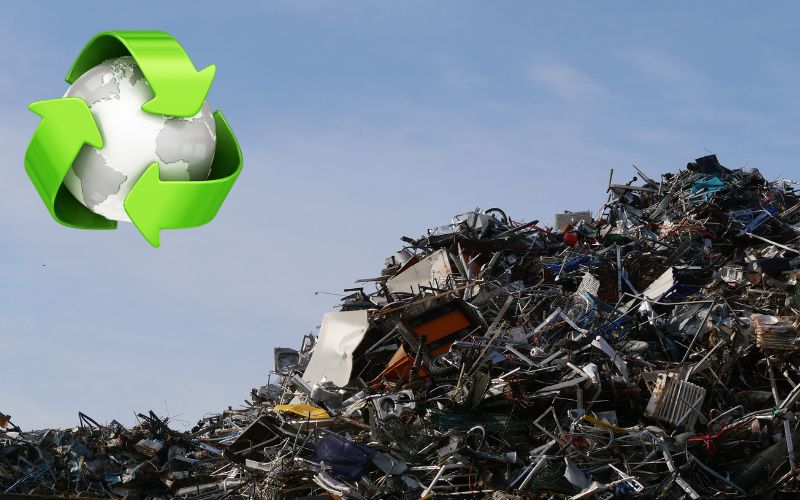
“Recycling is no longer just an environmental responsibility; it has become a strategic necessity for manufacturing industries. As global supply chains become more volatile and resource costs continue to rise, recycled materials are helping industries build resilience, improve efficiency and reduce dependence on virgin resources. The circular economy is creating a new industrial ecosystem where waste itself becomes a valuable raw material.” Adithya Jayakar, Joint Managing Director, UCAL Ltd
India’s manufacturing sector is increasingly turning towards recycling as a strategic solution to address rising raw material costs, supply chain disruptions, sustainability pressures and the growing demand for resource efficiency. What was once viewed primarily as a waste management activity is now evolving into a critical pillar of industrial production and the broader circular economy model.
The shift comes at a time when industries across automotive, metals, plastics, electronics and textiles are under pressure to reduce their carbon footprint while maintaining competitiveness. Recycling is enabling manufacturers to reduce dependence on virgin raw materials, conserve energy and create more resilient supply chains. Industry experts believe this transformation could significantly reshape the future of manufacturing in India.
According to industry estimates, India’s recycling industry could grow into a multi-trillion-dollar opportunity by 2047 as the country accelerates its transition towards a circular economy. Reports also indicate that sectors such as plastics, e-waste and battery recycling are witnessing rapid investments and technological innovation, with the combined recycling market expected to expand substantially over the coming years.
The concept of circular economy revolves around extending the lifecycle of materials through reuse, remanufacturing and recycling instead of the traditional “take-make-dispose” model. This approach is becoming increasingly important for manufacturing industries that rely heavily on finite natural resources.
In the automotive sector, recycled metals, plastics and electronic components are gaining importance as manufacturers attempt to build more sustainable production ecosystems. Companies are also increasingly integrating recycled inputs into supply chains to align with environmental, social, and governance (ESG) goals.
Recycling is no longer just an environmental responsibility; it has become a strategic necessity for manufacturing industries. As global supply chains become more volatile and resource costs continue to rise, recycled materials are helping industries build resilience, improve efficiency and reduce dependence on virgin resources. The circular economy is creating a new industrial ecosystem where waste itself becomes a valuable raw material.
For manufacturing companies, especially in the automotive and engineering sectors, integrating recycling into production processes can significantly lower energy consumption and carbon emissions while enhancing long-term sustainability. The future of manufacturing will increasingly depend on how effectively industries adopt circular economy principles.
The recycling ecosystem is also witnessing strong policy support. India’s Extended Producer Responsibility (EPR) regulations, sustainability mandates and focus on green manufacturing are encouraging industries to invest in recycling infrastructure and waste recovery systems. Recent initiatives in e-waste, plastic recycling, and metal recovery are helping formalise the sector and create new economic opportunities.
Experts say recycling not only reduces landfill burden and environmental degradation but also generates employment, encourages innovation and strengthens domestic manufacturing capabilities. Advanced technologies such as AI-driven waste sorting, chemical recycling and digital material tracking are further improving the efficiency of recycling systems and supporting industrial circularity.
As industries globally move towards low-carbon manufacturing models, recycling is expected to emerge as one of the most important enablers of sustainable industrial growth. For India, which aims to become a global manufacturing hub, the integration of recycling and circular economy practices could prove vital in balancing economic expansion with environmental responsibility.
The author is Adithya Jayakar, Joint Managing Director, UCAL Ltd
