

“Unlike export-dependent nations, India’s economic vitality is primarily driven by internal consumption and investment, making it far less vulnerable to fluctuations in foreign demand or arbitrary trade restrictions.”
In the turbulent theatre of global commerce, the imposition of tariffs and the rise of protectionist policies have become a common weapon. The recent decision by the United States to levy a punitive 50% tariff on certain Indian goods, framed as a response to India’s pragmatic foreign policy and economic decisions, has caused a ripple of concern. Yet, to view this measure as a debilitating blow would be a profound misreading of India’s newfound geopolitical and economic strength. Far from being a victim, India today stands as a resilient and self-assured economic power, capable of not only weathering this storm but using it as a catalyst for a more self-reliant and influential future. The time for fear is over; this is an opportunity to prove a nation’s mettle.
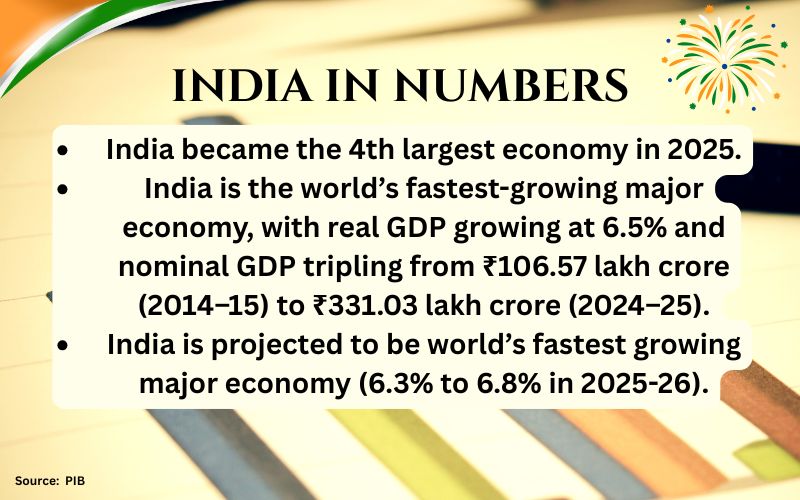
India’s economic foundation has never been stronger. After years of sustained growth and targeted reforms, the nation has recently surpassed Japan to become the world’s fourth-largest economy, with a nominal GDP of over $4 trillion. This is not a fleeting achievement but the culmination of a decade of strategic policy, earning it the title of the world’s fastest-growing major economy. Projections by institutions like the IMF confidently forecast its ascent to the third position by 2028. This growth is underpinned by a robust and dynamic domestic market of over 1.4 billion people, which acts as a powerful buffer against external shocks. Unlike export-dependent nations, India’s economic vitality is primarily driven by internal consumption and investment, making it far less vulnerable to fluctuations in foreign demand or arbitrary trade restrictions.
“As India builds its domestic supply chains for sectors like semiconductors, defence and electronics, it is systematically reducing its reliance on foreign inputs and preparing to compete on a global scale.”
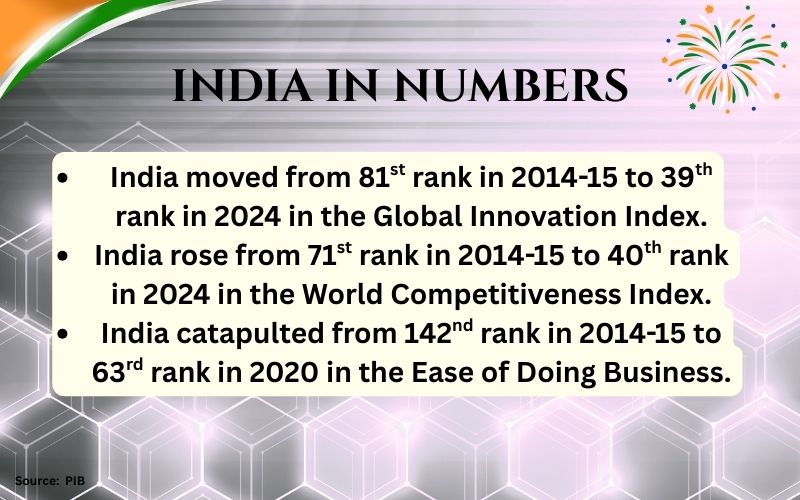
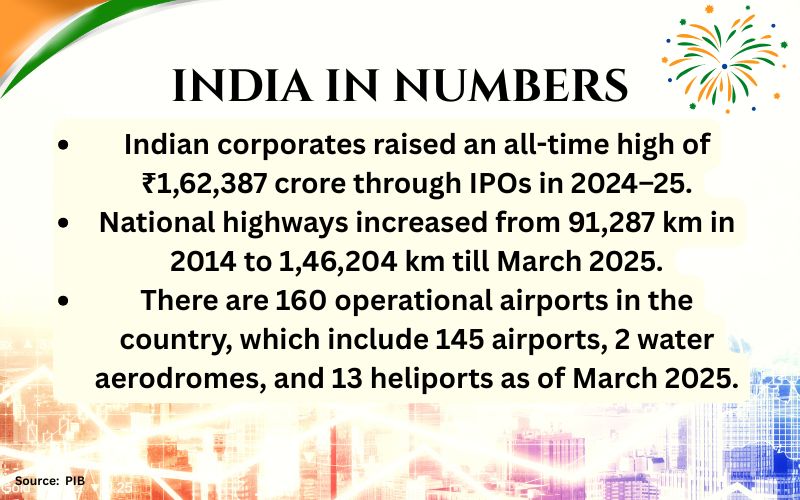
This economic fortitude is a direct result of a stable and politically strong government at the helm, which has consistently prioritized structural reforms. For the past decade, a series of bold policy changes—from the comprehensive Goods and Services Tax (GST) to the ‘Make in India’ initiative—have modernized the economy, improved the ease of doing business and attracted record foreign direct investment (FDI). Cumulative FDI inflows have already reached over a trillion dollars, with a significant portion arriving in the last ten years alone. These reforms have breathed new life into the manufacturing sector, which is now moving away from its low-cost production image towards innovation-led, high-tech manufacturing. As India builds its domestic supply chains for sectors like semiconductors, defence and electronics, it is systematically reducing its reliance on foreign inputs and preparing to compete on a global scale. The US tariffs, in this context, serve as an urgent push, forcing India to accelerate its quest for ‘Aatmanirbhar Bharat’, or a self-reliant India.
“The Rupee’s increasing acceptance is not just an economic convenience; it is a symbol of a multipolar world order in which India is a leading and respected player.”
The argument that these tariffs will isolate India from global trade is equally flawed. While the US is a significant trade partner, it is not the only one. India’s resilient diplomacy and diversified trade strategy have already cultivated strong relationships with a multitude of nations. The burgeoning importance of the BRICS bloc—now including five new members and representing over a quarter of the global economy—provides a powerful counterweight to Western-centric trade systems. The group’s growing focus on de-dollarization and the promotion of trade in local currencies offers a pragmatic alternative. Countries from Russia to Malaysia are increasingly accepting the Indian Rupee for international trade, a move that simplifies transactions and reduces dependence on the US dollar, thus negating the very premise of using the dollar’s supremacy as a political tool. The Rupee’s increasing acceptance is not just an economic convenience; it is a symbol of a multipolar world order in which India is a leading and respected player.
“The decision to continue purchasing discounted Russian oil is a prime example. This move is not an act of defiance but a sensible economic imperative to secure affordable energy for a massive, energy-hungry population. It has helped stabilize global oil prices and has saved India billions of dollars, savings that can be reinvested in domestic growth and development.”
Furthermore, India’s approach to complex geopolitical situations, particularly its continued economic engagement with nations like Russia and its strategic re-evaluation of its relationship with China, is based on a sound, pragmatic logic. The decision to continue purchasing discounted Russian oil is a prime example. This move is not an act of defiance but a sensible economic imperative to secure affordable energy for a massive, energy-hungry population. It has helped stabilize global oil prices and has saved India billions of dollars, savings that can be reinvested in domestic growth and development. To sacrifice this economic benefit for a foreign political agenda would be illogical and detrimental to the welfare of its citizens. Similarly, with China, India is demonstrating a mature and forward-looking approach. While a significant trade imbalance remains, recent diplomatic engagements and agreements to reopen border trade signal a willingness to find common ground. This is not about ceding ground; it is about building a stable and mutually beneficial relationship based on economic logic, not past rivalries.
“In conclusion, the tariffs are not an existential threat but a test of India’s resilience. They may cause some short-term and mid-term pain for specific industries, but they offer a long-term opportunity for a nation that has already demonstrated its ability to transform adversity into advantage.”
In conclusion, the tariffs are not an existential threat but a test of India’s resilience. They may cause some short-term and mid-term pain for specific industries, but they offer a long-term opportunity for a nation that has already demonstrated its ability to transform adversity into advantage. This is a moment for India to double down on its policy reforms, accelerate its indigenization efforts, and deepen its trade relationships with a wider circle of nations. By reinforcing its domestic economy and asserting its strategic independence, India can prove that its rise is not dependent on the goodwill of any single nation. The world is watching, and India is ready to show that its ascent is not merely an aspiration but an unstoppable reality.
