
“Manufacturing challenges cannot be addressed in isolation. Envisioned as a leading global centre for research, education, innovation, and industrial problem-solving, the Institute recognizes that productivity, technology adoption, research translation, workforce readiness, and supply chain coordination require integrated perspectives and sustained collaboration between academia, industry, and policymakers.” Professor Pankaj Chandra, Vice Chancellor of Ahmedabad University
“Strengthening manufacturing requires close engagement with firms alongside a deep understanding of industrial policy, labour capabilities, productivity, and innovation systems. Advanced manufacturing will require systems integration that brings AI into various production domains. The Institute is planned to work closely with manufacturing industry in India.” Professor Sunil Kale, Dean of the School of Engineering and Applied Science and Co-Director of the Institute
India stands at a critical juncture, with manufacturing expected to drive the next phase of growth and development. Recent Free Trade Agreements are expected to intensify global competition while opening new opportunities for Indian firms to integrate into global markets. At the same time, India’s development trajectory will require increasing manufacturing’s contribution to GDP from about 15 percent to 25 percent, while addressing a dual challenge of leading in innovation-driven, technology-intensive manufacturing and enabling labour-intensive enterprises to achieve high productivity and create jobs.
These imperatives formed the backdrop to the R&D Conclave on the Changing Nature of Innovation, held at Ahmedabad University in collaboration with the Centre for Technology, Innovation and Economic Research (CTIER). The Conclave saw participation from senior leaders and R&D heads from industry, national research and funding institutions, and government, including representatives from Tata Chemicals, Pidilite Industries, NXP Semiconductors, the Anusandhan National Research Foundation, and the Ministry of Electronics and Information Technology, alongside academic leaders and policymakers engaged in manufacturing, innovation, and industrial policy.
On the sidelines of the Conclave, Ahmedabad University announced the setting up of the Institute of Manufacturing and Economy to rethink the future of manufacturing in relation to innovation, productivity, and economic strategy. The transformation of manufacturing demands advances in materials, processes, and digital manufacturing, alongside stronger linkages between small and large firms and better coordination across supply chains. It also requires new approaches to talent development and to research, both managerial and technological, to enhance productivity and innovation.
Conceived in response, the Institute of Manufacturing and Economy brings together scientists, engineers, economists, managers, social scientists, policymakers, and industry practitioners, and treats manufacturing as a cross-disciplinary challenge spanning engineering, management, public policy, economics, and science, with a strong emphasis on collaboration with industry and government.
“Manufacturing challenges cannot be addressed in isolation. Envisioned as a leading global centre for research, education, innovation, and industrial problem-solving, the Institute recognizes that productivity, technology adoption, research translation, workforce readiness, and supply chain coordination require integrated perspectives and sustained collaboration between academia, industry, and policymakers,” said Professor Pankaj Chandra, Vice Chancellor of Ahmedabad University.
Through sustained engagement with firms and industrial clusters, the Institute aims to translate research into solutions relevant to manufacturing practice while developing a distinct and informed point of view on Indian manufacturing.
According to Professor Sunil Kale, Dean of the School of Engineering and Applied Science and Co-Director of the Institute, strengthening manufacturing requires close engagement with firms alongside a deep understanding of industrial policy, labour capabilities, productivity, and innovation systems. Advanced manufacturing will require systems integration that brings AI into various production domains. The Institute is planned to work closely with manufacturing industry in India.
Institution’s activities will include new product and process optimization, executive education programmes, manufacturing clinics for SME, publishing policy and competitiveness reports, and the biannual Stepwell Manufacturing and Economy Dialogue. It will also support postgraduate education at Ahmedabad University in areas such as composites, microelectronics and semiconductors, advanced manufacturing, 3D printing and operations management, alongside initiatives that support startups in advanced manufacturing.
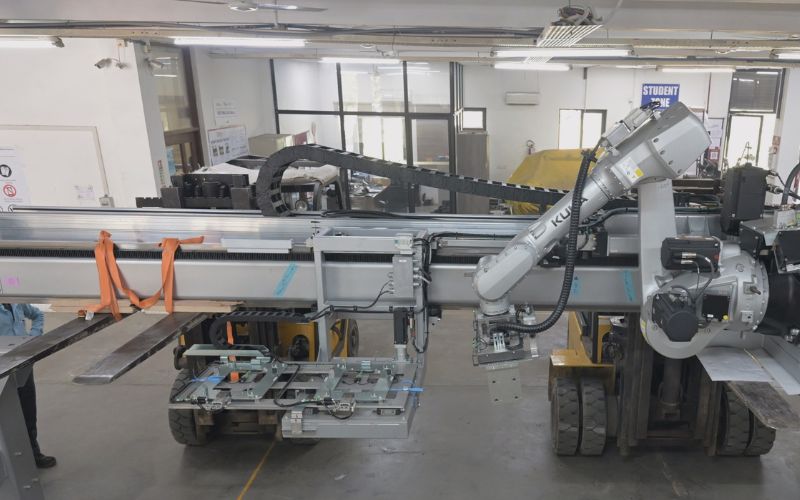
The Institute draws on the breadth and depth of facilities at Ahmedabad University, including cutting-edge laboratories, fabrication and prototyping shops, The Learning Factory, VentureStudio, Tinkerers’ Laboratory, High Performance Computing infrastructure, Bloomberg Laboratory and incubation and research infrastructure. These facilities will support collaborative research, prototyping, testing, and training in partnership with industry. Through its integrated approach to research, education, and industry collaboration, the Institute of Manufacturing and Economy seeks to contribute to India’s transition towards a high-productivity, innovation-driven manufacturing ecosystem.
