

“We are witnessing a shift, that it is no longer only about AI-defined products, but increasingly about AI-defined processes – an all-or-nothing transformation demanding fundamental change rather than incremental improvements that no longer suffice.” Harald Kroeger, President of Automotive Business at SiMa.ai
The role AI plays in shifting mentalities from process to product. We are witnessing a shift, that it is no longer only about AI-defined products, but increasingly about AI-defined processes – an all-or-nothing transformation demanding fundamental change rather than incremental improvements that no longer suffice.
In 2026, this shift will accelerate as AI becomes indispensable in industries where failure is not an option. The defence industry, for example, is rapidly embracing AI as drones evolve into essential tools, while in manufacturing, AI is enabling near-perfect production with minimal waste. This convergence of human craftsmanship and machine marks a new paradigm where intelligence lives within the product itself, not just in distant data centres. Machines will become far more interactive, intuitive, and collaborative, ushering in a new era of seamless human-AI partnership, we call it ‘the ghost in the machine.
For the first time, multimodal AI models will operate directly inside products such as robots, vehicles, industrial systems, and medical devices. This shift is enabled by low-power Physical AI platforms that can execute complex pipelines on the edge, allowing machines to perceive, reason, and act without reliance on the cloud. As a result, the year 2026 will mark a turning point where the defining features of a product are no longer mechanical or digital add-ons, but the intelligence embedded within it.
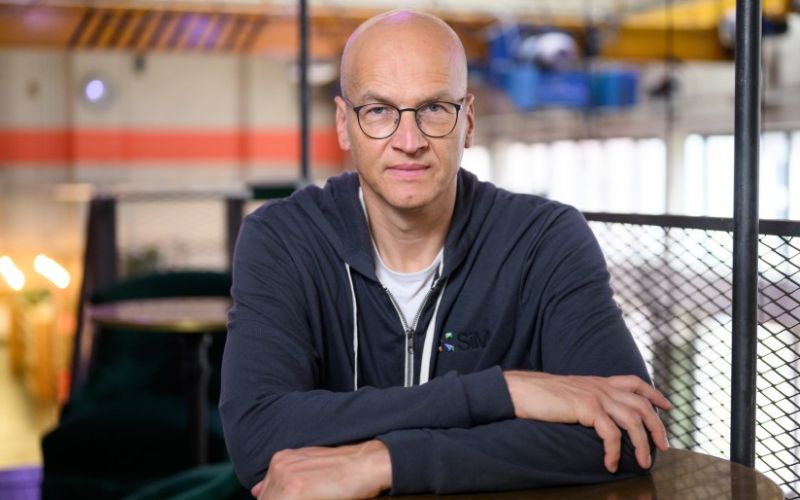
The author is Harald Kroeger, President of Automotive Business at SiMa.ai
