


“India’s ambition to become a global drone hub is not just about economic growth—it’s about strategic self-reliance and technological leadership. By leveraging government support, a vibrant start-up ecosystem, and strong domestic demand, India can establish itself as a global leader in UAV innovation.” Agnishwar Jayaprakash, Founder and CEO, Garuda Aerospace
Unmanned Aerial Vehicles (UAVs), or drones, are no longer a futuristic concept—they are redefining national security, economic growth, and technological innovation in India. Beyond military applications, drones are fast becoming a linchpin of India’s vision for an Atmanirbhar Bharat, demonstrating how self-reliance in advanced technologies can shape the country’s global standing for decades to come.
The Economic Promise of Indigenous Drone Manufacturing
The potential of India’s drone sector is monumental. Industry projections indicate that by 2030, domestic drone manufacturing could contribute an additional US$ 23 billion to India’s GDP. Domestic procurement volumes are expected to rise from 8,381 units in 2025 to over 16,750 units by 2030, reflecting both rising demand and the strength of India’s start-up ecosystem.
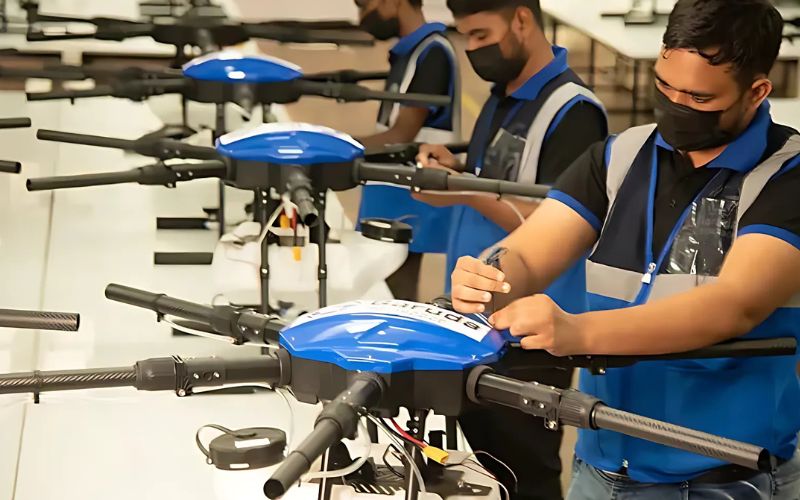
The ripple effects of such growth are profound: a robust manufacturing ecosystem creates employment opportunities for engineers, technicians, and entrepreneurs while building capabilities in precision manufacturing, software development, and electronics. By localizing production, India can reduce import dependency, retain value within the economy, and channel resources toward capacity-building and innovation.
Strengthening Technological Sovereignty
For India, the stakes go beyond economic growth—national security depends on technological independence. Relying on foreign suppliers for intelligence, surveillance, or reconnaissance drones creates strategic vulnerabilities. Indigenous drone development ensures operational autonomy, control over design upgrades, and the ability to tailor systems for India’s diverse terrain, altitude variations, and climate conditions.
Indian engineers are already producing drones capable of performing complex defence missions, offering proof of our domestic capabilities. Indigenous development allows customization, adaptability and reliability, giving India a clear strategic edge in defence and beyond.
“Initiatives like the Production-Linked Incentive (PLI) Scheme and Drone Shakti have increased financial support for manufacturers from ₹120 crore to ₹3,000 crore, incentivizing local production and technological development.”
Government Policies Accelerating Growth
The Indian government has recognized the strategic importance of drones and is actively fostering domestic innovation. Initiatives like the Production-Linked Incentive (PLI) Scheme and Drone Shakti have increased financial support for manufacturers from ₹120 crore to ₹3,000 crore, incentivizing local production and technological development. Under these schemes, manufacturers receive up to 20% incentives on value addition, which encourages capacity building and reduces import dependency.
The Digital Sky program has further simplified drone adoption by designating 90% of Indian airspace as green zones. This has unlocked new opportunities across sectors, creating sustained demand for domestically manufactured drones.
Transforming Indian Industries
Drones are not limited to defence applications—they are catalyzing transformation across multiple sectors:
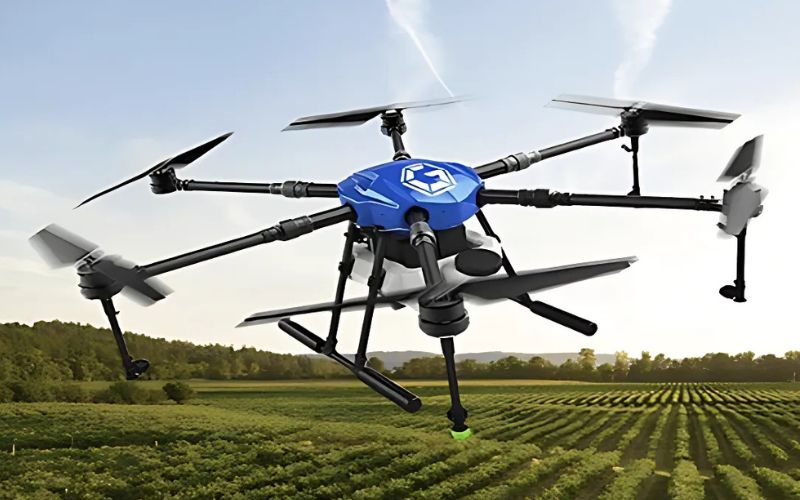
- Agriculture: Precision spraying, crop health monitoring, and land surveying enhance productivity while conserving resources.
- Infrastructure and Construction: Drones streamline project monitoring, surveying, and inspections with unprecedented efficiency.
- Healthcare: Delivery of medical supplies to remote areas is faster, safer, and more reliable.
- Disaster Management: UAVs provide rapid situational assessment during floods, earthquakes, and forest fires.
The versatility of drones means that the economic and social benefits of this technology will continue to expand, touching nearly every aspect of India’s growth story.
“India is well-positioned to become a global drone hub. International markets are actively seeking alternatives to Chinese suppliers, and Indian start-ups are uniquely capable of offering solutions designed for challenging environments, limited infrastructure, and diverse operational needs.”
Global Market Opportunities
India is well-positioned to become a global drone hub. International markets are actively seeking alternatives to Chinese suppliers, and Indian start-ups are uniquely capable of offering solutions designed for challenging environments, limited infrastructure, and diverse operational needs.
Global drone markets are projected to reach between US$ 57.8 billion and US$ 163.6 billion by 2030. Asia-Pacific is expected to be the fastest-growing region, while North America retains a strong market share. Indian innovations in cost-effective, resilient, and technologically advanced drones can enable the country to capture a significant portion of this expanding global market.
Challenges and the Road Ahead
While India’s drone sector is growing rapidly, challenges remain:
- Component Dependency: Achieving complete supply chain independence requires sustained investment in localized component production. The PLI scheme mandates 40% localization, but continued effort is needed to cover critical components such as batteries, sensors, and avionics.
- Regulatory Complexity: Harmonizing regulations across states and central agencies remains a work in progress. Streamlined governance is essential to maintain industry momentum.
- R&D and Capital: Current R&D investment at 0.64% of GDP is modest. Scaling breakthrough innovation in battery technology, autonomous systems, AI integration, and advanced materials will require more substantial investment and patient capital.
A Vision for 2030 and Beyond
India’s ambition to become a global drone hub is not just about economic growth—it’s about strategic self-reliance and technological leadership. By leveraging government support, a vibrant start-up ecosystem, and strong domestic demand, India can establish itself as a global leader in UAV innovation.
The next five years are critical. Accelerated R&D, focused skill development, and strategic investment in supply chains will determine India’s place in the global drone economy. The rewards are enormous: indigenous drones can not only power our defence and economy but also position India as a model for technological sovereignty, innovation, and self-reliance for the world.
Indigenous drones are more than machines—they are a statement of India’s capability, ambition, and future-ready vision. By building drones, we are, in effect, building nations.
The author is Agnishwar Jayaprakash, Founder and CEO, Garuda Aerospace
