

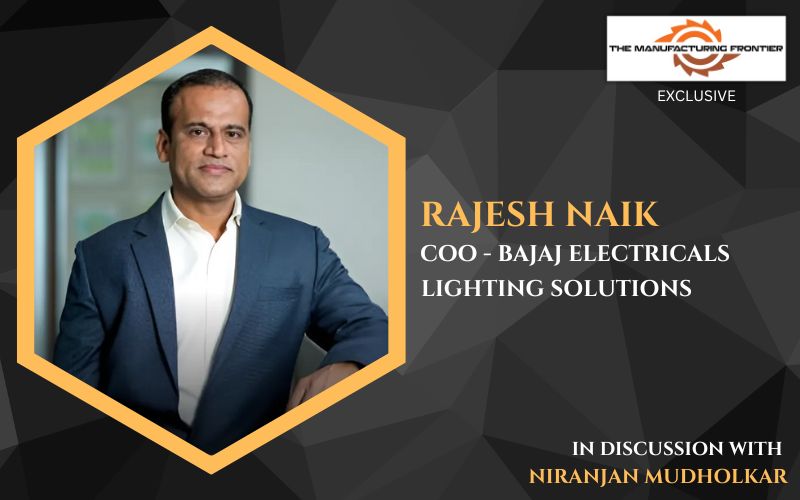
“For the consumer lighting segment, we focus on design, aesthetics, and intuitive features that align with modern lifestyle preferences. In contrast, our institutional lighting solutions prioritize durability, regulatory compliance, energy efficiency, and robust performance—critical for large-scale infrastructure projects.” Rajesh Naik, COO – Bajaj Electricals Lighting Solutions
Over the last six years, you have played a key role in transforming and unifying the lighting division. Could you elaborate on the key strategic decisions and initiatives that led to this successful transformation, and what were the initial challenges you faced in achieving this unification?
In 2022, we unified our consumer and professional lighting verticals under one leadership to drive synergy, streamline operations, and improve responsiveness. The initial challenge was aligning disparate teams and legacy processes, but we overcame this with a clear roadmap, harmonized systems, and shared KPIs.
The recent exclusive collaboration with SEAK s.r.o. for tunnel lighting projects is a significant step. What is the strategic vision behind this partnership, and how do you see SEAK’s proprietary power line control technology revolutionizing tunnel lighting infrastructure in India?
Our strategic partnership with SEAK, established in April 2025, marks a key milestone in our vision to deliver smart, future-ready infrastructure solutions for India’s rapidly expanding tunnel network. Through SEAK’s advanced power-line communication technology, we can now offer intelligent, energy-efficient lighting systems that are remotely controllable and easily integrated into central control networks. This enables enhanced safety, reduced maintenance, and operational efficiency—critical for large-scale projects under initiatives like Bharatmala and upcoming expressway corridors. The collaboration reinforces our commitment to driving innovation in infrastructure and supporting India’s transition toward smarter, more sustainable transport ecosystems.
India’s infrastructure development goals are ambitious. How does this partnership with SEAK directly align with and contribute to these national objectives, particularly in the context of smart and sustainable infrastructure?
India’s ambitious infrastructure push—especially with over 150 tunnel projects planned across highways and metro systems—demands smart, scalable, and sustainable solutions. Our partnership with SEAK directly supports this vision by enabling intelligent tunnel lighting through advanced power-line communication (PLC) technology. This innovation reduces installation complexity by eliminating the need for additional control cabling, ensures reliable performance in challenging tunnel conditions, and allows for remote monitoring, adaptive dimming, and real-time fault diagnostics. Together, these capabilities align seamlessly with national objectives under programs like Bharatmala, contributing to more efficient, future-ready transport corridors.
“As India moves toward more digitally connected and sustainable infrastructure, PLC-based lighting control aligns perfectly with the need for centralized monitoring, energy optimization, and predictive maintenance—making it a future-ready solution across diverse use cases.”
Beyond tunnel lighting, what other potential applications or expansions do you foresee for SEAK’s technology within Bajaj Lighting’s broader portfolio, especially considering India’s diverse and evolving infrastructure needs?
SEAK’s power-line communication (PLC) technology presents a versatile and scalable opportunity for Bajaj Lighting to extend smart lighting solutions well beyond tunnel infrastructure. By leveraging existing power lines for both power and data transmission, the technology eliminates the need for separate communication cabling—significantly reducing installation time and costs. This makes it ideal for applications across highways, smart city street lighting, industrial zones, multi-level parking structures, large institutional campuses, EV corridors, and metro depots. The system enables real-time control, adaptive dimming, remote diagnostics, and fault alerts, enhancing operational efficiency and reliability. As India moves toward more digitally connected and sustainable infrastructure, PLC-based lighting control aligns perfectly with the need for centralized monitoring, energy optimization, and predictive maintenance—making it a future-ready solution across diverse use cases.
Could you provide insights into Bajaj Electricals’ current manufacturing capabilities and capacities for lighting products?
We manufacture across ISO-certified plants at Ranjangaon and Chakan, covering a wide range from LED lamps and luminaires to galvanized poles and custom fixtures. Our facilities are vertically integrated with in-house die-casting and testing capabilities.
The lighting market is dynamic, with modern consumers prioritizing personal style and government projects seeking innovative solutions. How does Bajaj Electricals strategically cater to these diverse demands, balancing aesthetic appeal for consumers with the robust technical requirements of large-scale infrastructure projects?
We follow a segmented innovation strategy that caters to the distinct needs of both consumers and institutional clients. For the consumer lighting segment, we focus on design, aesthetics, and intuitive features that align with modern lifestyle preferences. In contrast, our institutional lighting solutions prioritize durability, regulatory compliance, energy efficiency, and robust performance—critical for large-scale infrastructure projects. This dual approach is powered by a unified R&D platform that enhances speed to market, ensures quality, and optimizes costs. Innovations such as tunable white lighting, IoT-enabled luminaires, human-centric designs, and modular optics allow us to deliver tailored solutions across diverse use cases—whether it’s enhancing home ambience or powering smart city infrastructure—ensuring we meet the evolving expectations of style, performance, and sustainability.
“We integrate sustainable design principles by using high-efficacy LEDs, smart lighting controls, recyclable materials, and eco-friendly packaging. Our manufacturing plants are progressively adopting green practices, including energy optimization, waste reduction, and increased reliance on renewable energy sources.”
What specific initiatives is Bajaj Electricals undertaking to promote sustainability, from product design and manufacturing processes to energy efficiency and end-of-life management?
We are committed to sustainability across the entire product lifecycle—from design and manufacturing to usage and end-of-life management. We integrate sustainable design principles by using high-efficacy LEDs, smart lighting controls, recyclable materials, and eco-friendly packaging. Our manufacturing plants are progressively adopting green practices, including energy optimization, waste reduction, and increased reliance on renewable energy sources. We also develop products with longer lifespans and lower carbon footprints, enabling energy savings through automation and intelligent control systems. To minimize environmental impact at the end of the product lifecycle, we actively promote luminaire recycling and e-waste take-back programs. These initiatives align with both India’s environmental regulations and global sustainability standards, reinforcing our commitment to building a cleaner, greener future.
Looking ahead, what are the biggest opportunities and challenges you foresee for Bajaj Lighting in the next 3-5 years, particularly in light of rapid technological advancements and evolving market demands?
Over the next 3–5 years, Bajaj Lighting sees significant opportunities in connected lighting, smart city projects, and large-scale public-private infrastructure developments such as expressways, metro networks, and EV corridors. These initiatives call for intelligent, interoperable lighting systems that drive energy efficiency, enhance urban management, and support digital transformation. At the same time, the landscape is rapidly evolving with advancements like Li-Fi communication, AI-powered energy analytics, and sensor-integrated luminaires becoming more mainstream.
The key challenge lies in staying ahead of these technological shifts while ensuring solutions remain affordable, secure, and compliant with dynamic regulatory frameworks. Additionally, factors such as global supply chain disruptions, raw material price volatility, and the need for localization underscore the importance of agile sourcing strategies, robust risk management, and continued investment in innovation to remain competitive and future-ready.
