

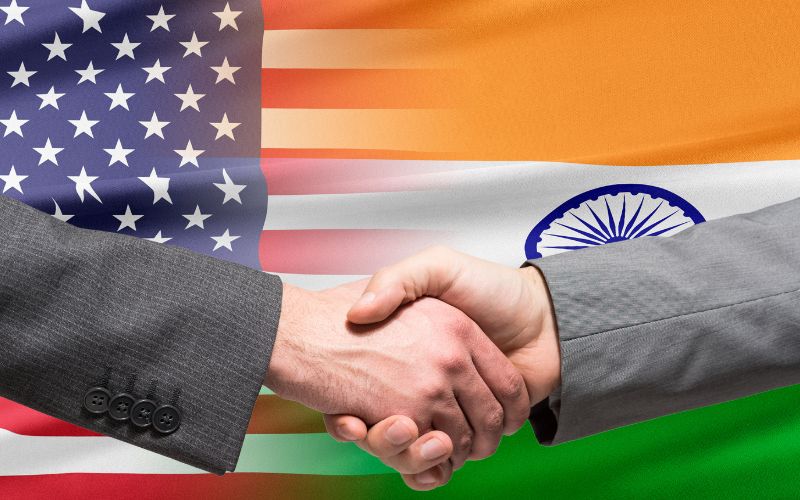
“The historic India-US trade deal marks a transformative shift in global commerce. By slashing tariffs from 50% to 18%, the agreement dismantles long-standing barriers, offering Indian manufacturers a decisive competitive edge while cementing a strategic economic alliance between the world’s two largest democracies.”
The global economic landscape has just witnessed a seismic shift. The conclusion of the long-awaited India-US trade agreement on 2nd February 2026, represents more than just a reduction in duties; it is a strategic recalibration between the world’s two largest democracies. After a year of “prolonged uncertainty”, as Ashok Hinduja, Chairman of the Hinduja Group of Companies, aptly puts it, the deal provides a “stable framework for cross-border commerce” and sends a “strong signal of confidence to global markets”.
At the heart of this historic pact is a dramatic tariff reset. The United States has slashed effective tariffs on Indian goods from a staggering high of 50% (which included a 25% punitive levy linked to Russian oil imports) to a streamlined 18%.
Restoring Competitive Edge: The 18% Advantage
For Indian manufacturers, this is the “sweet spot”. Aravind Melligeri, Executive Chairman & CEO of Aequs Limited, points out that this reduction materially improves India’s competitiveness against other Asian hubs. With China at 30% and Vietnam at 19%, India’s 18% rate positions it as the most attractive destination in the region. For sectors like Toys and Aerospace, where customers were previously burdened by the 50% tariff, this is nothing short of a “big tailwind”.
The sentiment is echoed by Vipul Joshi, CFO of ideaForge, who highlights the deal as a catalyst for the “entire Indian manufacturing ecosystem”. For a high-tech sector like Unmanned Aerial Vehicles (UAVs), which is critical to national security, the 18% tariff structure enhances cost-competitiveness and accelerates integration into global supply chains.
A Boost for Clean Energy
Perhaps the most transformative impact will be felt in the green energy corridor. The U.S. remains India’s most vital market for solar exports, and the reduction in tariffs from 25% to 18% (alongside the removal of punitive levies) is a “strategic turning point”.
“This change… positions India as a credible and dependable alternative manufacturing base that aligns with U.S. trade and industrial objectives,” says Prashant Mathur, CEO of Saatvik Green Energy.
By alleviating concerns regarding Chinese producers circumventing tariffs, the deal transforms the U.S. market from “high-risk to one full of opportunities” for Indian solar cell and module manufacturers.
Economic Convergence and “Viksit Bharat”
The broader consensus among industry titans is that this deal is a “win-win” rooted in deeper trust. Vineet Mittal, Chairman of Avaada Group, describes it as a visionary partnership that reinforces the economic bond through “aligned supply chains and shared prosperity”.
Beyond the immediate numbers—which include India’s reported commitment to purchase up to $500 billion in American goods across energy and technology—the agreement aligns with the long-term vision of Viksit Bharat (Developed India). It moves the needle from simple assembly to “Deep Manufacturing”, encouraging long-term investment flows and co-development of next-generation products.
Conclusion: From Uncertainty to Predictability
The leadership of Prime Minister Narendra Modi and Commerce Minister Piyush Goyal has been widely lauded for navigating these complex negotiations. By securing a deal that protects sensitive sectors like agriculture and dairy while opening doors for labour-intensive exports (textiles, leather, and engineering), India has reinforced its standing in a “fair, stable, and rules-based international trade order”.
As the “Made in India” label finds a firmer footing in American households and industries, the message is clear: the India-US partnership is no longer just a bilateral necessity; it is the cornerstone of a new global supply chain reality.
