

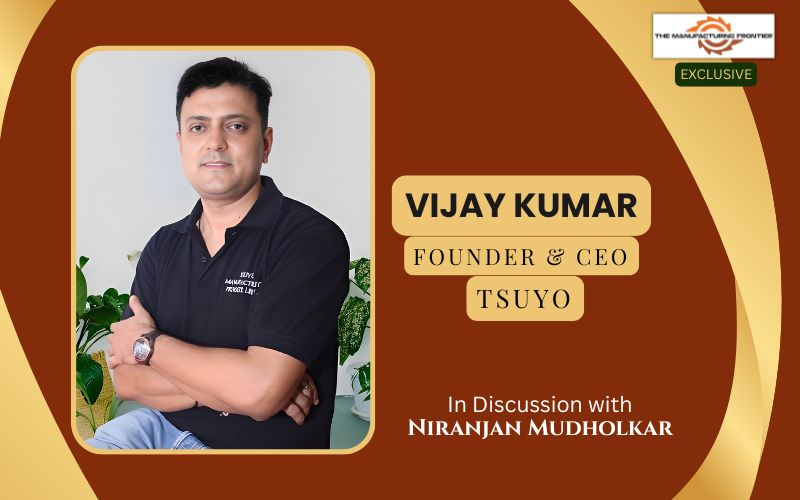
“Being local provides a significant speed and agility advantage. We are constantly in touch with market changes, allowing for faster product upgrades and makeovers. For partners like Mahindra and Volvo Eicher, this enables them to position their vehicles with a differentiated product offering and value proposition, supported by easy and sustainable system integration and validation for faster market scalability.” Vijay Kumar, Founder & CEO, Tsuyo
The shift to electric vehicles (EVs) in India’s heavy commercial segment presents a big challenge, demanding not just innovation, but solutions specifically engineered for Indian domestic conditions as well as for cost-sensitive operators. Stepping up to meet this demand is Tsuyo, a deep-tech startup carving out a unique position as a vertically integrated manufacturer of EV powertrain solutions.
In this insightful discussion, Niranjan Mudholkar, Founder & Editor-in-Chief, The Manufacturing Frontier, sits down with Vijay Kumar, Founder & CEO of Tsuyo, to understand the core of their operational and technological playbook. Kumar explains how Tsuyo is leveraging indigenous design and manufacturing capabilities—moving beyond mere assembly—to create powertrain solutions that offer value and reliability for OEM partners like Mahindra and Volvo Eicher.
The discussion goes deep into their intellectual property, specifically their 29 patentable innovations, including the ambitious development of rare-earth-free motors. Kumar reveals the technical hurdles in material science and lays out the commercialization roadmap for these future-proof technologies.
Furthermore, with fresh Pre-Series A funding dedicated to expanding their R&D in power electronics and embedded systems, Tsuyo is targeting next-generation Vehicle Control Unit (VCU) features, emphasizing seamless system integration and Over-The-Air (FOTA) capabilities—crucial for fleet management. Kumar explains how this vertical control, from motor design to axle integration, ensures both quality and speed.
Finally, we explore how Tsuyo balances premium, patented technology with the necessity of competitive pricing in the Indian market, and their vision for exporting “Made in India” deep-tech powertrains, making them a significant contender on the international stage. Tsuyo’s story is a blueprint for how local expertise can transform into world-class technology, setting a new benchmark for heavy-duty electric mobility.
What are the most significant indigenous advantages Tsuyo leverages—in design, material sourcing, or manufacturing processes—to build world-class EV powertrain solutions here, and how does this local focus translate into a competitive edge for your OEM partners like Mahindra and Volvo Eicher?
Tsuyo’s primary competitive advantage stems from a unique R&D approach that delivers powertrain solutions which are affordable, adaptable, and sustainable.
We have a deep, indigenous understanding of developing a sustainable and cost-effective Bill of Materials (BOM). This allows us to create modular solutions specifically tailored to the duty cycle and vehicle requirements (Statement of Requirements – SOR) of our local OEM partners.
The local focus ensures that our selection of parts, overall manufacturing processes, and component sourcing guarantees consistent supply and reliable after-sales support, which are critical for commercial vehicles.
Being local provides a significant speed and agility advantage. We are constantly in touch with market changes, allowing for faster product upgrades and makeovers. For partners like Mahindra and Volvo Eicher, this enables them to position their vehicles with a differentiated product offering and value proposition, supported by easy and sustainable system integration and validation for faster market scalability.
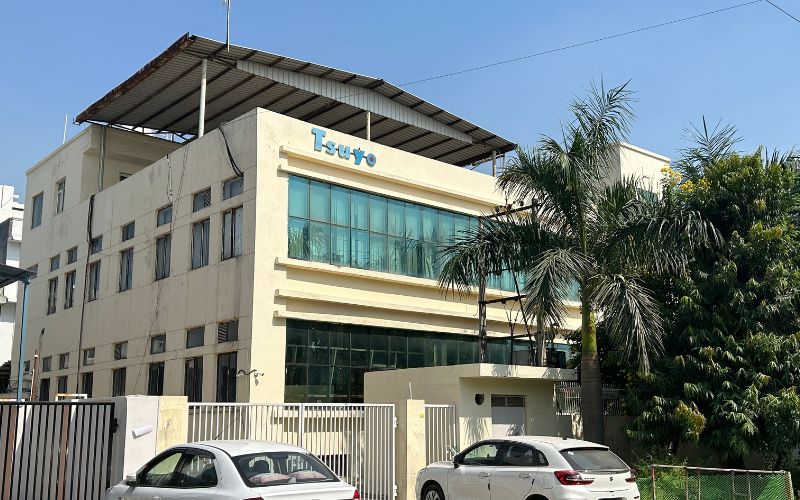
Your portfolio boasts 29 patentable innovations, notably in rare-earth-free and hybrid magnet-based motor technologies. Can you elaborate on the technical challenges and breakthroughs in developing these rare-earth-free motors? Where does this specific innovation sit on your long-term technology roadmap, and what’s the timeline for its commercial scaling, particularly in the high-wattage segment?
Our team is dedicated to creating future-proof, deep-tech solutions in motors and allied hardware, driven by shifting supply chain dynamics and the need for sustainability. The primary challenge lies in material substitution and validation. Moving away from rare-earths requires complex research, extensive material validation, and testing across lab, field, and prototyping stages. We face significant hurdles in simulation, feasibility studies, and ultimately, gaining market acceptance for new materials and designs. It is a profoundly difficult path to navigate and establish.
This is a very active research area. Currently, we have approximately 20% of the innovations are in the prototype stage, undergoing extensive Design Validation Plan (DVP) activities. Other projects are at the simulation findings and optimization level. A few are at the initial design and ideation stage.
Commercialization Roadmap (High-Wattage Focus):
Phase 1 (Target October 2026): ~20% of research items targeted for market launch.
Phase 2 (Target April 2028): ~40% of the portfolio earmarked for market introduction.
Phase 3 (Target March 2029 Onwards): The remaining innovations will be integrated into our long-term offerings.
Fund raised from the Pre-Series A round will be dedicated to a new R&D centre to accelerate deep-tech innovation in power electronics and embedded systems. How will this new centre enhance Tsuyo’s vertically integrated capabilities? Specifically, what are the next-generation features or performance metrics you aim to achieve in your Vehicle Control Units (VCUs) and drives through this focus on advanced embedded software?
The Pre-Series A funding is strategically focused on significantly scaling our R&D capabilities, primarily in power electronics and advanced embedded systems.
We will address key resource and infrastructure gaps by hiring highly skilled, experienced tech resources and by investing in advanced software licenses for design/simulation, faster rapid prototyping tools, and high-level testing rigs.
Our focus is on developing advanced vehicle-level software. We aim to achieve two things. 1. Creating modular, application-based interfaces that allow for easy configuration and customization based on specific duty cycles. 2. Implementing Firmware Over-The-Air (FOTA) for seamless updates, upgrades, and patch delivery while the vehicle is operational. This will enable real-time service support and dramatically improve customer ease of use.
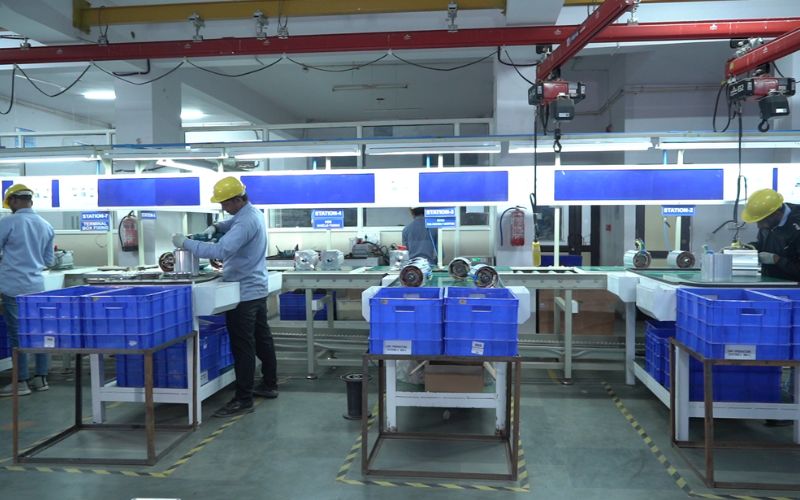
You are uniquely focused on heavy commercial vehicles (HCVs) with the new greenfield facility for high-wattage electric motors. What critical challenges specific to HCV powertrains, such as thermal management, durability, or energy density at higher power outputs, is Tsuyo solving?
Our dedicated new platform addresses the unique and rigorous demands of Heavy Commercial Vehicles (HCVs). We are developing specialized high-wattage solutions using advanced architectures, including SRM, Multiphase ACIM, IPM, SynRM, and in the high-voltage segment, Axial Flux-based solutions.
We are directly solving the critical challenges inherent to HCV powertrains. Our designs are optimized to sustain high power outputs over extended, high-duty cycles, which is a major thermal challenge. We are also building powertrains engineered for the most rugged operating conditions and demanding usage profiles, ensuring prolonged service life. Importantly, we ensure sustained high performance and energy efficiency required for heavy load transport over long distances.
Despite the complexity of deep-tech design and manufacturing in India, commercial success ultimately hinges on unit cost. How is Tsuyo managing the balance between premium, patented technology and the need for competitive pricing to achieve scale and displace traditional ICE powertrains in the cost-sensitive Indian commercial vehicle market?
We achieve the balance between premium, patented technology and competitive pricing through disciplined, vertically integrated cost management. We maintain close monitoring over our vertically integrated supply chain and utilize a lean production approach. This cuts down on overheads and rework. Our niche understanding of material specifications and manufacturing processes is key to developing highly efficient yet feasible solutions. Also, we tailor our offerings to meet the customer’s specific needs (value-in-use). By bundling the right level of technology and features, we ensure the total cost of ownership is compelling enough to successfully displace traditional Internal Combustion Engine (ICE) powertrains.
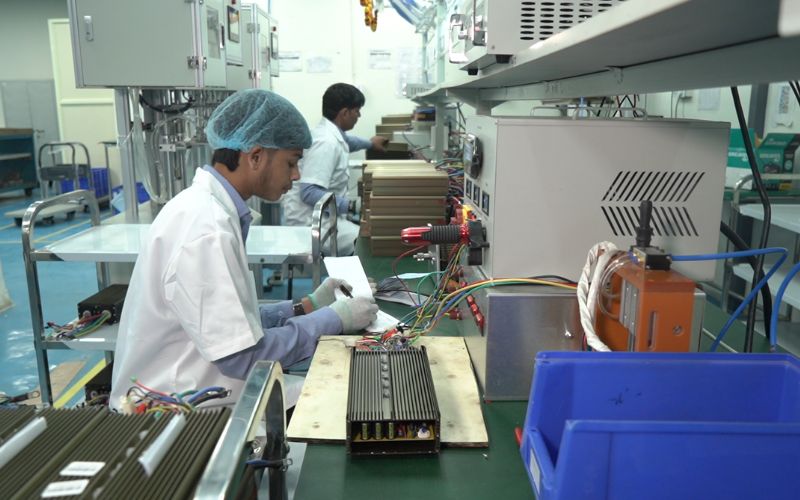
Tsuyo supplies a comprehensive product line from motors and drives to gearboxes and axles. How critical is this high degree of vertical integration to maintaining quality, controlling the supply chain, and accelerating the development cycle for your integrated powertrain solutions, particularly when working with diverse OEMs?
This high degree of vertical integration is absolutely critical and serves as a major competitive advantage for Tsuyo.
By owning the entire product line (motors, drives, gearboxes, axles), we can create an optimized, best-fit solution that is genuinely ‘Plug-and-Play’ for the OEM. This control eliminates the risk and difficulty OEMs face when trying to manage a seamless communication protocol between disparate hardware from multiple vendors. Vertical integration allows us to maintain strict quality control, enhance supply chain predictability, and significantly accelerate the development and validation cycle for our integrated powertrain solutions, which is a highly sought-after value by large, diverse OEMs.
With a strong domestic foundation, what is Tsuyo’s vision for exporting ‘Made in India’ deep-tech EV powertrains? What global markets and specific product segments are you targeting, and how will your new manufacturing and R&D capacities prepare you for competition on an international scale?
Tsuyo is a pioneer, being the only ‘Make-in-India’ EV powertrain startup already exporting and gaining international acceptance. Our vision is to organize and channelize this growth for significant global scale. We are already doing business in ASEAN countries like Philippines, Sri Lanka and Bangladesh directly and just started in Japan and Korea with indirect supplies through our OEM partners. We have recently entered the US and European markets through a reputable customer with a strong international presence. Our focus is on targeted expansion in these markets.
The new manufacturing and R&D facilities have been designed and conceptualized to international standards. They will incorporate global best practices and showcase capabilities specifically intended to attract and meet the rigorous demands of our export customers, enabling us to compete effectively on the international stage.

[…] Redefining India’s EV Powertrain Market – The Manufacturing Frontier […]