
“The company has expansions underway at Pirana, Ahmedabad; Dahej SEZ; Vapi Phase 3; Ankleshwar Phase 3; Panoli Phase 2; Jhagadia; Nandesari Phase 2 and plans to expand operations in Andhra Pradesh, Telangana, Maharashtra, Himachal Pradesh, Madhya Pradesh, Rajasthan, Uttar Pradesh and Haryana.”
Steamhouse India, India’s first company dedicated to centralized steam supply for industrial clients, has filed a confidential draft red herring prospectus (CDRHP) with the Securities and Exchange Board of India (SEBI) for an initial public offering (IPO).
While the issue size hasn’t been disclosed in the public intimation on 1st July 2025, sources expect the issue size to be between ₹500-700 crore.
Built on the industrial legacy of Sanjoo group, the company was founded in 2014 and is headquartered in Surat. Led by Vishal S Budhia, its chairman and managing director, Steamhouse India is spearheading the revolution in the industrial steam sector and serves over 167 clients across the country.
The company has expansions underway at Pirana, Ahmedabad; Dahej SEZ; Vapi Phase 3; Ankleshwar Phase 3; Panoli Phase 2; Jhagadia; Nandesari Phase 2 and plans to expand operations in Andhra Pradesh, Telangana, Maharashtra, Himachal Pradesh, Madhya Pradesh, Rajasthan, Uttar Pradesh and Haryana.
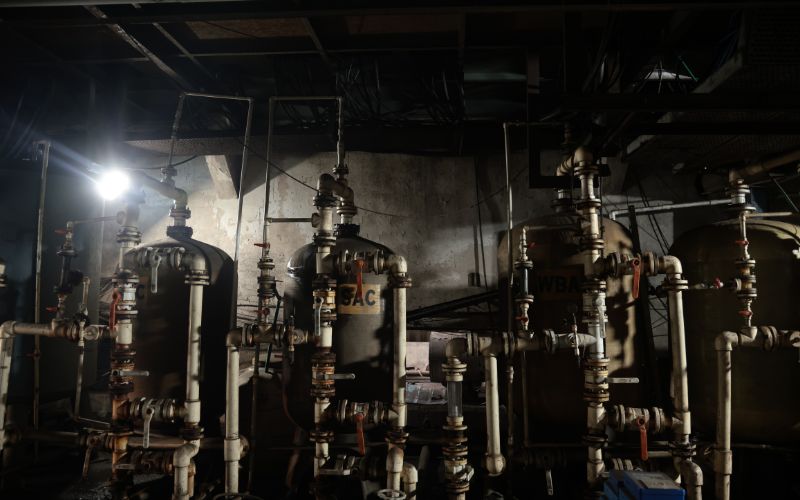
As per public available information it is known that the concept of community boiler was introduced by one of the group companies of Sanjoo group – an innovative and centralized alternative to traditional captive boilers – enabling manufacturing industries to lower emissions, cut operational costs and improve efficiency. The steam is sold at 190 degrees and innovatively uses IoT and AI, from procurement to distribution.
Its first waste to steam boiler in Vapi is already in commission where it takes non-recyclable plastic waste from paper mills and converts it. In March 2024, as per public reports it secured a 5MW W2S project from Ahmedabad Municipal Corporation. It entailed designing, building and commissioning and maintaining a 300 tonne per day plant under the PPP model.
As on 31st August 2024, its total operational and distribution capacity stood at 330 TPH and 200 TPH respectively. The company is expanding into adjacent avenues such as Nitrogen Compression and Distribution; conversion of municipal waste into steam and aviation logistics which it was applied for a Non Scheduled Operator Permit to enter the cargo and passenger aviation segment.
Steamhouse follows a pipeline based model and has over 45 kms of pipeline infrastructure in key industrial hubs like Sachin, Vapi, Ankleshwar, Sarigram, Panoli and Nadesari. It establishes a monopoly in areas where it operates.
Clients benefit from a seamless supply of steam at their doorstep, leading to a 25–30% reduction in production costs compared to using individual small boilers.
Additionally, the companies advanced pollution control systems are said to reduce mass emissions by 65–70% through optimized and shared fuel use across multiple units, reinforcing its commitment to sustainable industrial solutions.
As reported in its FY23-24 annual report, the company’s total revenue amounted to ₹291.71 crore, while their EBITDA saw a considerable increase to ₹70.14 crore from ₹58.79 crore in the previous financial year. It’s profitability for the same period stood at ₹25.97 crore.
Source: Publicly available information
Disclaimer: This article has been written only for information. It does not constitute a personal recommendation/investment advice. It does not aim to influence any individual or entity to make investment decisions. Recipients should conduct their own research and assessments to form an independent opinion about investment decisions. Investments in the securities market are subject to market risks, read all the related documents carefully before investing.
