
“Repeat orders are earned through performance. This milestone reflects the strength of our execution and the consistent results delivered across installations, while enabling water reuse and more efficient resource utilization for our customers.” Vimarsh Verma, Director at SED
Spray Engineering Devices Limited (SED), a global leader in energy‑efficient industrial technologies, and Laxmi Organic Industries Ltd have reinforced their long-standing partnership with a new order, marking the eighth repeat contract between the two companies. A pioneer in thermal engineering, SED specializes in high-efficiency solutions for evaporation, heat exchange, condensation, and crystallization, while Laxmi Organic is a leading manufacturer of acetyl intermediates and specialty chemicals for the pharmaceutical and agrochemical sectors.
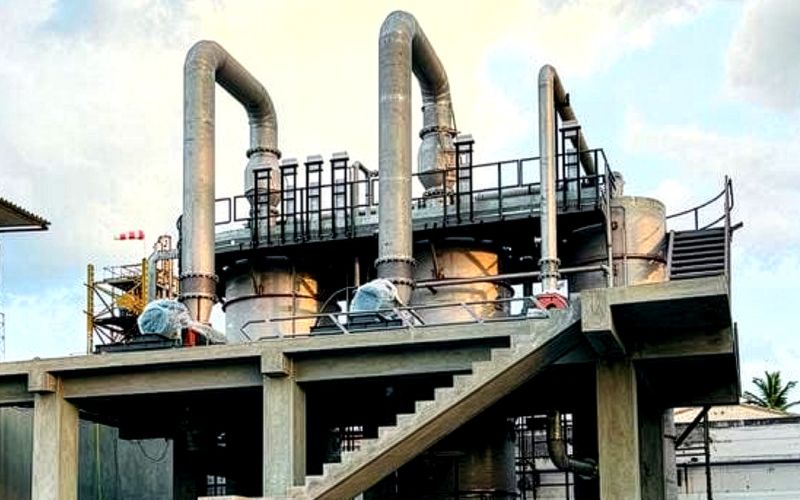
The project involves the manufacturing and supply of a 100 KLD Low Temperature Evaporation (LTE®) system, a core component of the facility’s Zero Liquid Discharge (ZLD) strategy, based on Mechanical Vapour Recompression (MVR) technology. SED will also provide design engineering and commissioning, incorporating a stripper column package for the removal of volatile organics and an MVR-based evaporator.
Commenting on the milestone, Vimarsh Verma, Director at SED, said “repeat orders are earned through performance. This milestone reflects the strength of our execution and the consistent results delivered across installations, while enabling water reuse and more efficient resource utilization for our customers.”
The system is designed to treat wastewater with extremely high concentration levels (inlet TDS of 106,000 ppm and COD 95,000 ppm) and will recover up to 77,000 litres of clean water per day for reuse within plant operations. Engineered for extreme energy efficiency, the MVR-based system will be installed at Laxmi Organic’s Dahej facility in Gujarat, which houses multiple chemical manufacturing units requiring continuous effluent treatment.
In the pharmaceutical and industrial chemical sectors, managing such complex wastewater is a difficult but essential task. These operations demand high levels of energy efficiency and process stability as manufacturers scale up. Driven by stringent regulatory standards, there is now a decisive move toward adopting closed-loop systems to optimize water consumption.
Repeat orders of this nature highlight the importance of performance consistency in vendor selection. In high-concentration applications, factors like evaporation efficiency, low energy use, and reliability influence long-term technology decisions.
This development reflects a broader industry shift toward water recovery and reduced freshwater dependency across chemicals, ethanol, and allied industries. Technologies based on thermal evaporation and vapour recompression are increasingly being adopted for their ability to handle complex discharges while maintaining predictable plant operations.
As water stress intensifies and environmental rules tighten, reliable operation, quick ROI, and maximum water recovery remain top priorities for Indian industries. Looking ahead, consistent performance and innovation will be the deciding factors for industrial procurement.
