

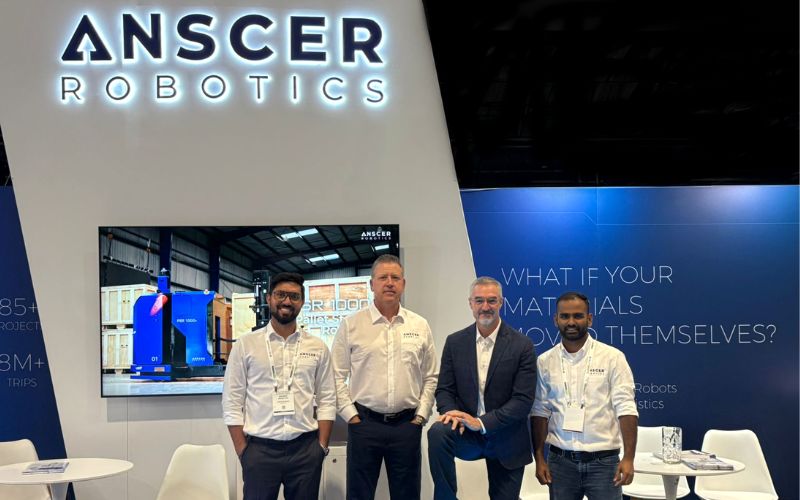
“Our ambition is to build robotics in India that customers can choose for operations here and across the world. This milestone is a step in that journey. For Indian businesses evaluating automation, we want ANSCER to represent strong engineering, practical application knowledge and a partner that understands the demands of international operations.” Ribin Mathew, Global CEO, ANSCER Robotics
ANSCER Robotics, an Indian developer and manufacturer of autonomous mobile robots, has received Conditional Approval for its autonomous robotic platforms under the U.S. framework for foreign-produced advanced robotic devices. The milestone supports the company’s ambition to take Indian robotics engineering into global industrial markets.
The approval provides an exemption from the relevant Federal Communications Commission (FCC) Covered List restrictions for the named platforms during the approval period, subject to its terms. It addresses a national-security eligibility requirement for FCC equipment authorization, supporting ANSCER’s pathway to serving the U.S. market. It also supports supplier evaluation by businesses considering ANSCER for material-movement projects across Indian and U.S. facilities.
ANSCER’s modular AR platform supports applications including lifting, tunneling and tugging. Combined with software integration, its robots are designed to connect material movement with production and warehouse workflows, helping businesses automate repetitive transport tasks and coordinate the movement of goods.
“Our ambition is to build robotics in India that customers can choose for operations here and across the world,” said Ribin Mathew, Global CEO, ANSCER Robotics. “This milestone is a step in that journey. For Indian businesses evaluating automation, we want ANSCER to represent strong engineering, practical application knowledge and a partner that understands the demands of international operations.”
The U.S. framework reviews ownership, supply chains and manufacturing plans. ANSCER’s approval remains subject to its terms, including quarterly reporting and progress against its agreed U.S. manufacturing plan. Separate equipment-authorization and local deployment requirements continue to apply.
