

“The simple answer is yes; we innovate in India. Take the Indian Railways, one of the world’s most demanding transport networks. Adhering to the stringent, region-specific mandates of the Bureau of Indian Standards (BIS) while meeting severe mechanical, thermal, and flame-retardant performance thresholds required Lapp to develop proprietary compound formulations locally. Backward integration at the Bhopal compounding plant was not just a logistics calculation; it created an engineering loop where materials could be formulated, tested, and tailored to local standards rather than imported off-the-shelf from Europe.” Hubertus Breier, Chief Technology Officer, Lapp Group
“It is not necessarily ‘de’ always. Sometimes, according to the requirement, we re-engineer. Approximately 80% of what the company sells in India is conceived, developed and manufactured domestically. These products are largely absent from Lapp’s European catalogue. We wouldn’t have been that successful if we had only said, ‘This is our global or European portfolio’ and sold it here. It’s from our own Indian team. It has been identified by the local sales team, engineered to local needs, and manufactured locally.” Matthias Lapp, Chief Executive Officer, Lapp Group
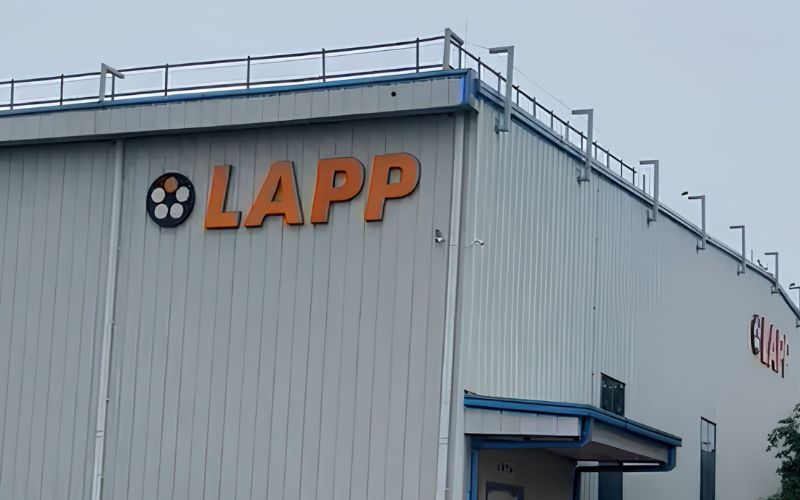
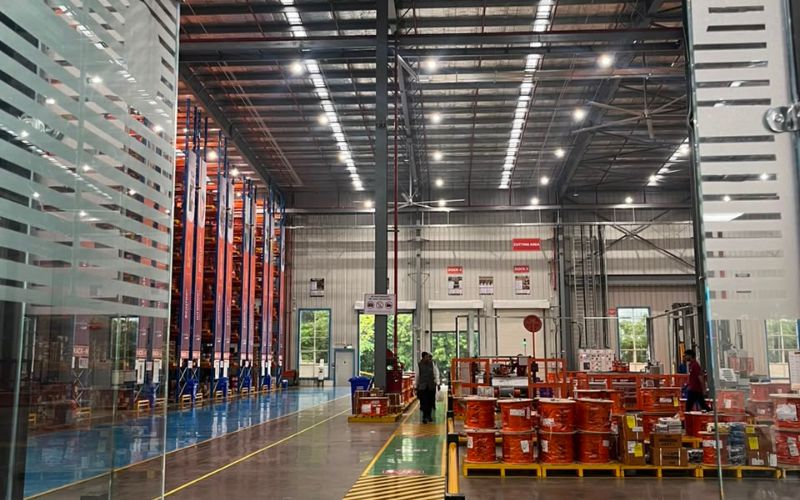
Walking through the sprawling factory premises of Lapp India’s manufacturing plant in Bhopal, Madhya Pradesh, one is immediately struck by the scale. At a time when global manufacturing footprints are constantly being recalibrated, this facility has quietly emerged as the German connectivity major’s largest plant anywhere in the world.
Marking 30 years since entering the Indian market in 1996, the €2-billion Lapp Group (globally the second-largest manufacturer of cable solutions) has anchored deep roots here. Alongside sites in Jigani (Bengaluru) and Dharuhera (Haryana), Lapp’s Indian footprint produces cables for demanding sectors such as railways, industrial automation, electric vehicles, renewable energy and heavy equipment.
Regular capital outlays underline this progress: the 2023 launch of Lapp’s first-ever backward-integrated Compounding Plant in Bhopal, the addition of an advanced electron-beam (e-Beam) cross-linking charger in 2024, and the most recent ramp-up (August 2026) of low-voltage power cable capacities.
Going Beyond the Surface
Yet, as impressive as the sheer spread, tonnage and machinery are, a critical question inevitably surfaces for anyone tracking India’s manufacturing growth story: Is this merely an offshore production base, or is India genuinely engineering and innovating for itself?
During my visit to the Bhopal facility, I put that question directly to Lapp Group’s global leadership: Chief Technology Officer Hubertus Breier and Chief Executive Officer Matthias Lapp. Their responses offered a candid look into how multinational industrial engineering actually adapts to local market dynamics. Indeed, the Lapp story in India offers valuable lessons for other German and international MNCs looking to grow in the Indian market.
Designing for Unique Domestic Realities
“The simple answer is yes; we innovate in India,” Mr. Breier stated. He pointed to tangible technical points that require Indian engineering intervention. “Take the Indian Railways, one of the world’s most demanding transport networks. Adhering to the stringent, region-specific mandates of the Bureau of Indian Standards (BIS) while meeting severe mechanical, thermal, and flame-retardant performance thresholds required Lapp to develop proprietary compound formulations locally. Backward integration at the Bhopal compounding plant was not just a logistics calculation; it created an engineering loop where materials could be formulated, tested, and tailored to local standards rather than imported off-the-shelf from Europe.”
Mr. Breier further explained that even when producing standard global designs, Indian shop-floor engineers must translate product specifications into locally viable parameters using dedicated tools like CableBuilder, factoring in machine capabilities, ambient production realities, and specific conductor configurations.
A notable example of this divergence is Lapp’s entry into low-voltage (LV) power cables. Across its global portfolio, Lapp has historically focused on instrumentation, control and data cables. However, the Indian industrial environment demanded broader end-to-end power delivery from main plant inputs to heavy machinery. To meet this, Lapp’s Bhopal facility broke corporate precedent by engineering and producing large-size LV power ranges incorporating aluminium conductors, a material choice heavily favoured in Indian infrastructure economics, marking a first in the group’s global history.
‘Reengineering’ vs. ‘De-Speccing’
Perhaps the most revealing part of our discussion centred on product strategy. For decades, international OEMs have struggled with the Indian market’s value proposition: global platforms are frequently over-engineered for local operational needs, pricing them out of contention.
Mr. Breier cited Lapp’s flagship cable gland, the Skintop: “We have a global product. Unfortunately, it has so many features and so much technology in that it does not meet the price segment expected in India for products which do not necessarily have to stick to UL or IEC regulations. So, we developed in India a product for India Skintop Smart.”
Manufactured at Lapp’s injection-moulding facility in Dharuhera, the product simply removed the unnecessary certification requirements without sacrificing fundamental functionality.
When I questioned whether this amounted to simply “de-speccing” a premium global component to hit an Indian price point, CEO Matthias Lapp offered an important distinction. “It is not necessarily ‘de’ always,” Mr. Lapp clarified. “Sometimes, according to the requirement, we re-engineer.”
The distinction is critical. De-speccing implies dilution; re-engineering represents design discipline. A product engineered for European weather extremes or nuclear-grade UL listings carries unnecessary cost overheads when deployed in an Indian dry-goods warehouse or standard textile unit. True product localization lies in identifying the precise performance envelope a customer requires and designing exactly to those boundaries.
The 80% Reality
The outcome of this approach is reflected in Lapp India’s current portfolio metrics. According to Mr. Lapp, approximately 80% of what the company sells in India is conceived, developed and manufactured domestically. These products are largely absent from Lapp’s European catalogue.
“We wouldn’t have been that successful if we had only said, ‘This is our global or European portfolio’ and sold it here,” Mr. Lapp remarked. “It’s from our own Indian team. It has been identified by the local sales team, engineered to local needs, and manufactured locally.”
Building this degree of local technical ownership comes with its own hurdles, most notably talent retention and skill development. Mr. Breier acknowledged that bridging advanced technical gaps requires Lapp to function almost like an internal academy, upskilling operators and engineers directly on-site.
The TMF Take
The narrative around Indian manufacturing is often reduced to factory openings, subsidies and export volumes. What gets overlooked is the granular work of product adaptation. However, Lapp India’s 30-year milestone and the expansion of its Bhopal hub demonstrate that sustainable industrial growth cannot rely indefinitely on copied blueprints. When 80% of a multinational’s local revenue is derived from products engineered specifically for domestic operational conditions, it signals a quiet but significant evolution: India is shifting from simply running the machines to helping define how the products are built.
