

“The Indian space sector is undergoing a paradigm shift from a state-operated model to a private sector-driven space economy. Hosting this plenary in India at this juncture has provided a valuable opportunity for the Indian space industry to contribute to global standard formation. Adopting and aligning with these standards will enable the development of globally competitive and interoperable space systems.” Dr. Pawan Goenka, Chairman, IN-SPACe
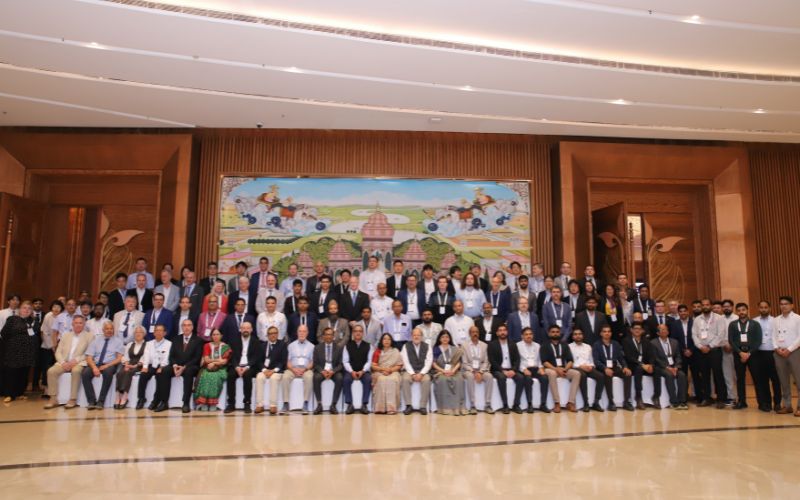
The Indian National Space Promotion and Authorisation Centre (IN-SPACe), in collaboration with the Bureau of Indian Standards (BIS), hosted the 36th Plenary of ISO TC 20/SC 14 on Space Systems and Operations, along with associated Working Group meetings, for the first time. The international event is being held from 4 May to 8 May 2026, at Bharat Mandapam, New Delhi, with BIS serving as the National Standards Body and official host.
The plenary saw participation from over 200 delegates across 33 member nations in a hybrid format, including around 55 delegates from 10 countries attending in person. Over the five days, specialized working groups will deliberate on key areas driving a sustainable and commercially viable space economy, including orbital debris (WG 7), space environment (WG 4), downstream space services (WG 8), and design engineering (WG 1).
In conjunction with the plenary, IN-SPACe and BIS will organize the International Workshop on Space Systems Standardization on May 7, 2026, featuring four panel discussions covering the complete lifecycle of space systems, including topics such as engineering, production and validation from concept to launch; programme management, quality and materials for ensuring reliability; challenges and standards in space operations and environmental management; and the need for safe orbits alongside sustainable space services to address emerging challenges.
Dr. Pawan Goenka, Chairman, IN-SPACe, in his inaugural address, said, “The Indian space sector is undergoing a paradigm shift from a state-operated model to a private sector-driven space economy. Hosting this plenary in India at this juncture has provided a valuable opportunity for the Indian space industry to contribute to global standard formation. Adopting and aligning with these standards will enable the development of globally competitive and interoperable space systems.”
He also thanked BIS and the Department of Consumer Affairs for hosting the plenary and expressed confidence in the sub-committee’s progress towards advancing the standards under development.
Rajeev Jyoti, Director (Technical), IN-SPACe, and Chairman of the BIS TED 14 Committee, welcomed delegates during the inaugural session and encouraged active participation, knowledge sharing, and collaboration across the working group meetings.
He highlighted that IN-SPACe, in coordination with BIS, represents India in ISO plenary and working group discussions, contributing to the adoption and localization of global standards as Indian Standards. He also urged stakeholders to actively engage in the workshop and share inputs to strengthen the evolving framework for space systems standardization.
