

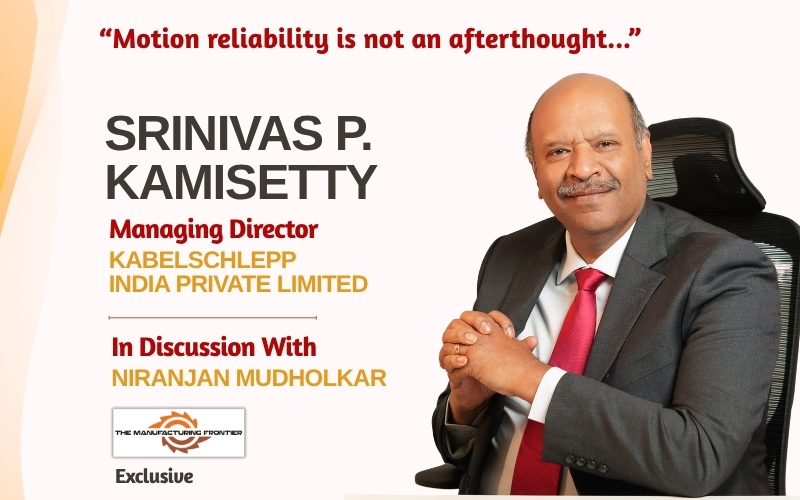
“Localization today is far more than manufacturing products within India. It involves local engineering expertise, rapid customization, shorter lead times, and responsive technical support while maintaining internationally proven engineering standards.” Srinivas P. Kamisetty, Managing Director, Kabelschlepp India Private Limited
As India’s manufacturing ecosystem accelerates toward higher speeds, tighter tolerances and smart automation, the components powering these high-performance machines are undergoing a structural shift. Motion control is no longer just about horsepower and spindle speeds; it is equally about protecting the vital lifelines that keep machines running without interruption. In modern high-speed CNCs, robotics and automated handling systems, dynamic cable carriers have transitioned from passive accessories to active engineering elements that safeguard productivity and profitability.
In this exclusive conversation with Niranjan Mudholkar, Founder & Editor-in-Chief, The Manufacturing Frontier, Srinivas P. Kamisetty, Managing Director of Kabelschlepp India Private Limited, shares deep operational insights into how localized engineering, high-precision robotic automation and Industry 4.0 condition monitoring are reshaping motion reliability. Leveraging over seven decades of global expertise from the Tsubaki Group, Mr. Kamisetty highlights how balancing global quality benchmarks with local agility enables Indian OEMs to compete on the world stage. From sustainable product life cycles to building inclusive technical workforces and bridging the academia-industry gap, this discussion offers a holistic blueprint for India’s emerging high-tech manufacturing landscape.
QnA
With Indian OEMs and machine builders accelerating towards higher speeds, acceleration, and tighter tolerances, cable carrier systems are no longer treated as passive conduits; they are critical motion control elements. From your vantage point across the machine tool, robotics, and heavy engineering sectors, how has the role of dynamic cable management evolved in safeguarding machine uptime and operational longevity?
The manufacturing industry has undergone a fundamental shift in how it views motion systems. Traditionally, cable carriers were considered accessories designed simply to organize cables. Today, they have become an integral part of machine engineering, directly influencing machine reliability, operational efficiency, and lifecycle performance.
Modern CNC machines, robotics, automated warehouses and material handling systems operate at significantly higher speeds and accelerations than ever before. Under these conditions, cables and hoses are subjected to continuous mechanical stress. Poor cable management can result in cable fatigue, unexpected failures, contamination, and costly production stoppages.
Today, dynamic cable management is engineered alongside the machine itself. Factors such as bending radius, acceleration, travel length, vibration, and environmental conditions are considered during the design stage. Properly engineered cable carrier systems not only protect electrical and hydraulic lines but also ensure consistent motion, extend service life, reduce maintenance requirements, and significantly improve equipment availability.
Ultimately, manufacturers have begun to recognize that motion reliability is not an afterthought—it is an essential contributor to productivity and profitability.
“Digital collaboration also enables local engineering teams to work closely with global R&D centres, ensuring customers benefit from worldwide application knowledge while receiving solutions tailored for Indian operating conditions.”
Indian manufacturers are increasingly looking for global engineering performance combined with local responsiveness. How are component and sub-system suppliers balancing the challenge of localizing production and application support while maintaining zero compromise on global quality benchmarks?
Localization today is far more than manufacturing products within India. It involves local engineering expertise, rapid customization, shorter lead times, and responsive technical support while maintaining internationally proven engineering standards.
The most successful suppliers are those that manufacture locally using globally standardized processes, validated designs, certified materials, and rigorous quality systems. Digital collaboration also enables local engineering teams to work closely with global R&D centres, ensuring customers benefit from worldwide application knowledge while receiving solutions tailored for Indian operating conditions.
For customers, this translates into faster project execution, lower logistics costs, and quicker service response without compromising product performance or reliability.
India has reached a stage where localization and global quality are no longer mutually exclusive—they must coexist.
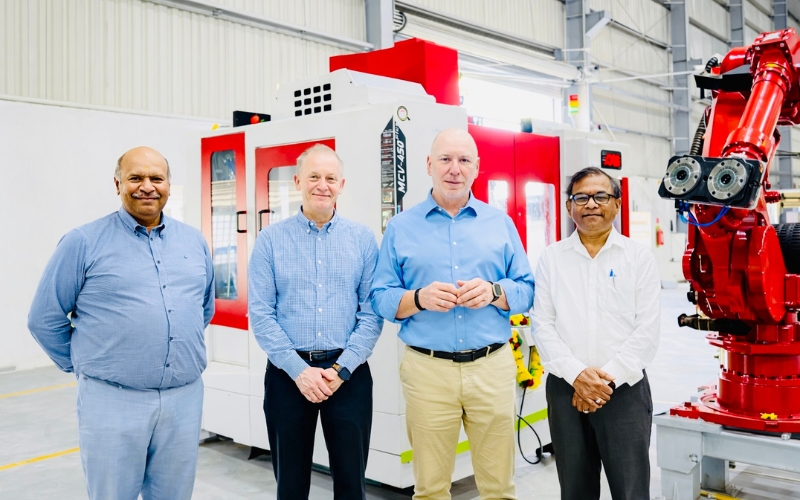
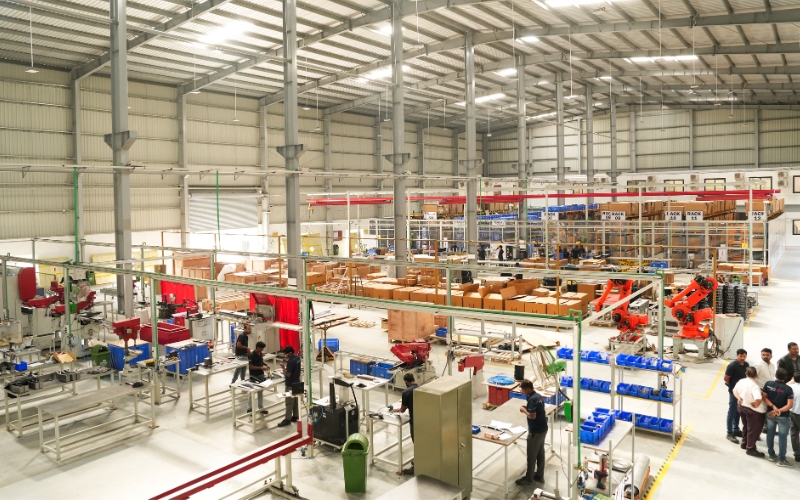
Kabelschlepp India recently integrated an advanced Vertical Machining Center (VMC) with robotic automation at its Bengaluru facility. Beyond capacity expansion, how do investments in automated, high-precision machining transform your operational flexibility and responsiveness to custom OEM specifications?
Automation is often misunderstood as simply increasing production capacity. In reality, its greatest advantage lies in consistency, flexibility and responsiveness.
Our investment in advanced VMC technology integrated with robotic automation enables us to achieve higher machining accuracy, consistent repeatability, reduced setup times, and improved production scheduling. These capabilities become particularly valuable when serving OEMs requiring highly customized solutions rather than standard catalogue products.
Automation also allows us to respond faster to engineering changes, reduce manufacturing variability, and optimize resource utilization. As customers increasingly seek application-specific motion solutions, manufacturing agility becomes a competitive advantage.
Ultimately, automation enables us to produce complex components with greater precision while maintaining shorter delivery timelines and consistently high quality.
Industry 4.0 is shifting maintenance from reactive to predictive strategies. How is condition monitoring being embedded into dynamic cable management systems, and what data points are proving most critical for plant managers attempting to prevent unexpected downtime?
Predictive maintenance is becoming an integral part of modern manufacturing, and motion systems are increasingly participating in this transformation.
Today’s intelligent cable carrier systems can be integrated with sensors that monitor operating cycles, travel distance, acceleration, temperature, vibration, and wear characteristics. Instead of waiting for failures to occur, maintenance teams receive early indications of abnormal operating conditions, allowing interventions to be planned during scheduled maintenance windows.
For plant managers, the most valuable data points include operating cycle counts, unusual vibration patterns, excessive tensile loads, changes in movement characteristics, and environmental factors such as dust or temperature that accelerate wear.
The objective is simple: replace components based on actual operating conditions rather than arbitrary maintenance intervals. This improves machine availability, reduces maintenance costs, and minimizes unexpected production interruptions.
“Global collaboration combined with local engineering execution creates significant value for Indian OEMs competing in international markets.”
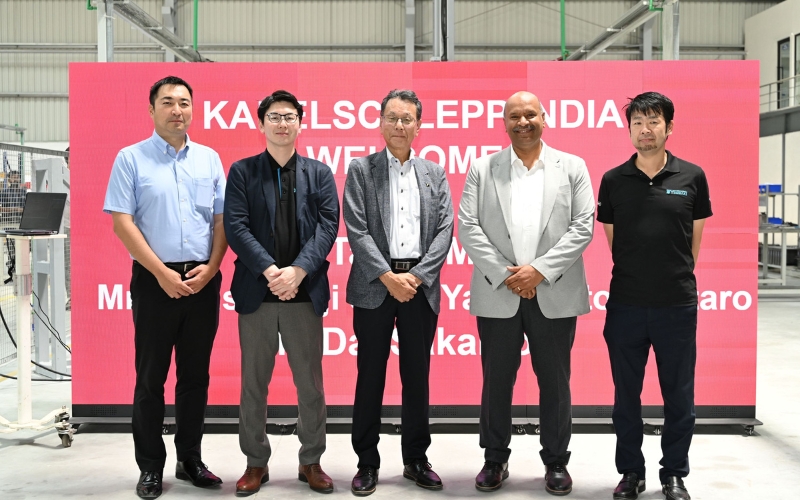
Above Pic: Tsubaki Senior Leadership Visits Kabelschlepp India – The Manufacturing Frontier
Being part of the Tsubaki Group brings access to over 70 years of global motion control expertise. How does Kabelschlepp India cross-leverage group-wide R&D and global application engineering to solve complex, niche challenges for Indian OEMs?
One of the greatest advantages of being part of the Tsubaki Group is access to decades of global engineering knowledge across diverse industries and geographies.
Our engineering teams regularly collaborate with global experts to address complex applications involving long travel distances, harsh operating environments, robotics, automation, clean rooms, heavy-duty equipment, and specialized manufacturing processes. This collaborative approach allows us to leverage proven engineering methodologies while adapting them to Indian operating conditions and customer requirements.
Rather than developing solutions in isolation, we benefit from global validation, accumulated application experience, and continuous product innovation. This enables us to deliver reliable solutions even for highly specialized or technically demanding applications.
Global collaboration combined with local engineering execution creates significant value for Indian OEMs competing in international markets.
Sustainability is moving from a corporate commitment to an operational mandate. How are sustainable manufacturing practices shaping modern product development in motion control?
Sustainability today extends beyond reducing emissions; it encompasses designing products that consume fewer resources, last longer, require less maintenance, and improve overall operational efficiency.
Modern motion control solutions are increasingly engineered using durable materials, optimized designs, and manufacturing processes that minimize waste while maximizing product life. Longer-lasting components naturally reduce replacement frequency and lifecycle environmental impact.
Additionally, efficient motion systems contribute indirectly to sustainability by reducing machine downtime, improving energy efficiency, and minimizing unnecessary maintenance activities.
As manufacturers evaluate total lifecycle performance rather than initial acquisition cost alone, sustainability and engineering excellence are becoming closely aligned objectives.
“Our own experience has demonstrated that diverse engineering teams contribute fresh perspectives, stronger collaboration, improved problem-solving, and ultimately better business performance. Inclusion should therefore be viewed not only as a social responsibility but also as a strategic business advantage.”
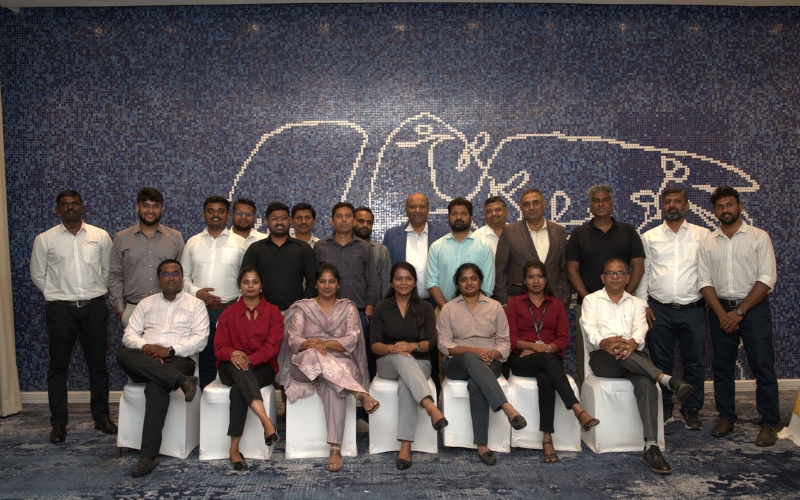
Kabelschlepp India has proactively championed women in engineering and manufacturing roles. Based on your operational experience across major industrial organizations, what structural initiatives are most effective in building gender-inclusive shop floors and engineering teams?
Building gender-inclusive workplaces requires structural commitment rather than symbolic initiatives.
Organizations must first create an environment where equal opportunity is embedded within recruitment, technical training, career progression, leadership development, and workplace policies. Modern manufacturing increasingly depends on technical competence rather than physical strength, creating greater opportunities for diverse talent.
Equally important is investing in mentorship, skill development, safe working environments, flexible career pathways where appropriate, and leadership accountability for diversity outcomes.
Our own experience has demonstrated that diverse engineering teams contribute fresh perspectives, stronger collaboration, improved problem-solving, and ultimately better business performance. Inclusion should therefore be viewed not only as a social responsibility but also as a strategic business advantage.
As manufacturing technologies become increasingly sophisticated, finding and retaining technical talent remains a sector-wide challenge. How can industrial organizations build a robust talent pipeline that bridges the gap between academic training and industry-ready engineering skills?
Closing the industry-academia gap requires much stronger collaboration between educational institutions and manufacturers.
Students need greater exposure to practical engineering through internships, apprenticeships, live industrial projects, factory visits, and application-based learning. Equally, industry must actively participate in curriculum development to ensure graduates possess relevant technical competencies.
Within organizations, continuous learning is becoming essential. Structured technical training, cross-functional exposure, mentoring programs, digital learning platforms, and clear career development pathways significantly improve employee engagement and retention.
Manufacturing technologies are evolving rapidly, making lifelong learning a competitive necessity rather than an optional investment.
“India has a tremendous opportunity to become a preferred global manufacturing destination, but long-term competitiveness will depend on engineering excellence rather than cost competitiveness alone.”
Which specific segments, such as defence manufacturing, aerospace, electronics or renewable energy infrastructure, do you see driving the next decade of demand for high-performance motion control and cable protection solutions?
India’s manufacturing landscape is diversifying rapidly, creating new opportunities for advanced motion technologies.
Defence manufacturing, aerospace, semiconductor and electronics manufacturing, renewable energy equipment, battery manufacturing, warehousing automation, robotics, electric mobility, and railway infrastructure are all expected to witness substantial growth over the coming decade.
These industries demand exceptionally high levels of precision, reliability, cleanliness, and continuous operation. As automation becomes increasingly sophisticated, motion systems capable of supporting higher speeds, longer travel distances, and more demanding operating environments will become even more critical.
The common denominator across these sectors is their dependence on reliable, uninterrupted motion.
Looking ahead, as India positions itself as a global manufacturing hub, what key strategic imperatives must Indian machinery manufacturers prioritize to compete effectively on the global stage?
India has a tremendous opportunity to become a preferred global manufacturing destination, but long-term competitiveness will depend on engineering excellence rather than cost competitiveness alone.
Manufacturers must invest in advanced automation, digitalization, quality systems, product innovation, workforce development, and globally competitive supply chains. Equally important is designing products for reliability, serviceability, energy efficiency, and lifecycle performance.
Innovation should become a continuous process rather than a periodic initiative. Companies that integrate digital technologies, embrace predictive maintenance, strengthen supplier ecosystems, and focus on customer-centric engineering will be best positioned for global success.
India possesses the engineering talent, entrepreneurial capability, and manufacturing scale to compete internationally. The next phase of growth will be defined by how effectively we convert these strengths into globally benchmarked manufacturing excellence.

Amazing article!