

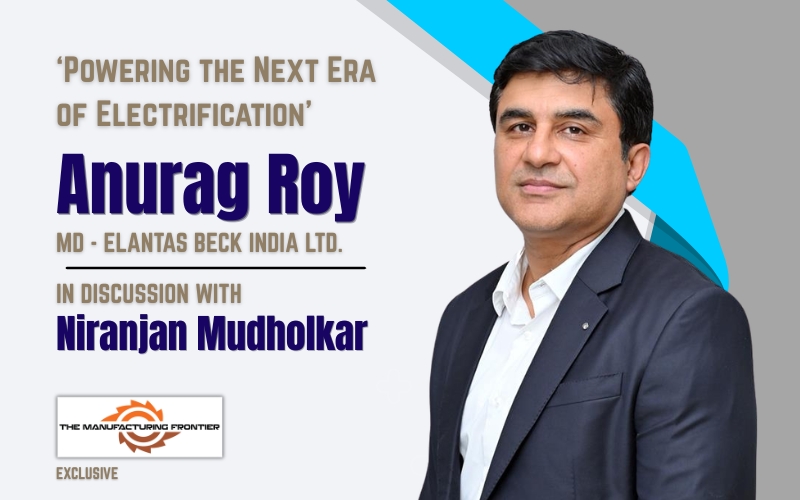
“I believe the next phase of growth for India’s specialty chemicals industry will be driven not by scale alone, but by the ability to combine global technology with local application expertise, customer collaboration, and continuous innovation. That combination will determine how successfully Indian manufacturers compete in an increasingly specialized global market.” Anurag Roy, Managing Director, ELANTAS Beck India Ltd.
The global transition toward high-voltage systems, compact electronics, and renewable infrastructure has fundamentally shifted the performance benchmarks for modern manufacturing. At the core of this transition lies advanced material science, specifically, the specialized insulation, potting, and encapsulation chemistries that safeguard critical assets from severe electrical, thermal, and mechanical stress.
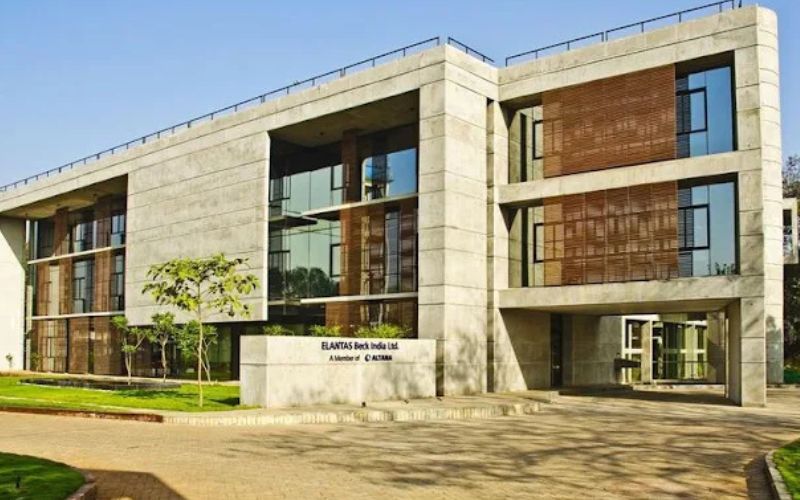
ELANTAS Beck India Ltd. has stood as a foundational pillar in the country’s electrical insulation sector for over seventy years. Yet, navigating today’s megatrends requires far more than legacy standing. From co-developing high-reliability potting systems for electric vehicle onboard chargers to deploying low-VOC, monomer-free chemistries, the company is bridging global ALTANA AG innovation with deep, localized formulation and testing capabilities.
In this exclusive conversation with Niranjan Mudholkar, Founder & Editor-in-Chief of The Manufacturing Frontier, Anurag Roy, Managing Director, ELANTAS Beck India Ltd., discusses how the organization balances decades of trusted technology with agile, application-first co-development. Mr. Roy provides an insightful look into mitigating supply chain vulnerabilities, advancing decarbonization targets toward net-zero and positioning India as an indispensable hub for high-performance specialty chemicals.
QnA
With over seven decades of legacy in electrical insulation, ELANTAS Beck India Ltd. has been an integral part of India’s industrial journey. How are you balancing this legacy with the need to move toward next-generation chemistries?
For more than 70 years, ELANTAS Beck India Ltd. has built its reputation on proven electrical insulation technologies. As the industries we serve have evolved, we have continued to invest in new materials and capabilities while building that strong foundation. Our objective is not to replace a trusted legacy, but to strengthen it for applications that demand higher efficiency, safety, and reliability.
We began with wire enamels and have since expanded across low-voltage, high-voltage, and electronics applications. This evolution has been supported by our global technology network, regional expertise, and a continuous focus on application-led innovation. By combining core technology development with local formulation and technical support, we are able to adapt solutions to specific customer and market requirements.
This combination allows us to preserve build on our established electrical insulation capabilities while developing solutions for applications such as e-mobility, energy transition, and increasingly compact electronics.
What specific mega-trends in manufacturing and infrastructure do you view as the biggest growth catalysts for ELANTAS Beck India in the coming decade?
Four broad trends will shape demand for electrical insulation and protection materials over the coming decade:
The first two are grid modernization and e-mobility. Rising electricity demand, decentralized generation, and ageing infrastructure will require transformers, motors, generators, and distribution equipment that can operate reliably under higher voltages and increasingly dynamic loads. In e-mobility, opportunities extend well beyond batteries to traction motors, power electronics, and charging infrastructure, creating demand for dielectric coatings, potting and encapsulation materials, thermal interface materials, impregnation resins, and wire enamels.
The other two are renewable energy and energy storage, and electronics and data centres. Solar, wind, hydro, and battery energy storage systems require materials that can withstand electrical, thermal, and environmental stresses over long operating lives. At the same time, higher processing power and increasing miniaturization in electronics are driving demand for materials that deliver reliable electrical insulation, thermal management, and long-term protection.
While these sectors are evolving in different ways, they all have one thing in common. More powerful and efficient systems must continue to operate safely and reliably under increasingly demanding conditions, and that is where advanced insulation and protection materials become increasingly important.
The rise of electric vehicles and high-voltage power electronics presents new technical hurdles in insulation, potting, and electronic protection. How is ELANTAS Beck India partnering with automotive OEMs and tier-1 suppliers to co-develop solutions for e-mobility?
We don’t begin with a standard formulation. We begin with the application.
We engage with OEMs and Tier-1 suppliers early to understand the component design, operating temperatures, voltage levels, vibration exposure, fire-safety requirements, and manufacturing processes. From there, our teams bring together formulation expertise, application engineering, and material testing to develop solutions suited to the customer’s specific requirements. Our laboratories support magnet-wire coating, impregnation, casting, potting, and conformal-coating trials, along with electrical, mechanical, thermal, and physical testing under representative application conditions.
For example, when a customer needs to validate a potting approach for an EV motor or module, we can facilitate trials within 48 hours, supported by testing and characterization at our laboratories.
In one recent instance, we worked with a leading EV manufacturer in India to address reliability challenges associated with onboard chargers. These chargers operate under demanding conditions, including high voltage, continuous heat generation, thermal cycling, mechanical vibration, and stringent fire-safety requirements.
Rather than offering a single product, we developed a portfolio-based potting solution tailored to the specific onboard charger module and designed it for integration into the customer’s automated manufacturing process. The approach improved heat dissipation, reduced hotspot temperatures, enhanced resistance to vibration and thermal cycling, helped reduce field failures, and supported a more consistent manufacturing process.
As part of ALTANA AG, how does ELANTAS Beck India leverage global technical capabilities and R&D synergies while tailoring formulations specifically for the unique operating and environmental conditions of the Indian subcontinent?
Our model is built on a simple combination: global R&D strength and regional expertise. Our global R&D teams develop core technologies for worldwide applications, while our regional teams work closely with customers to adapt those technologies to local operating conditions and manufacturing requirements.
In India, we translate that capability through local formulation, application support, and rigorous testing from raw material to finished product. Our application laboratories, digitized processes, and three manufacturing facilities allow us to tailor chemistries for customer-specific operating conditions, including heat, humidity, electrical stress, cure windows, production line speeds, and automated application methods.
This combination allows globally developed technologies to be adapted, validated, and supported for real operating environments, ensuring they remain relevant to local customer requirements.
Given recent global supply chain disruptions and volatile raw material pricing in the specialty chemicals sector, what strategic steps are you taking to build a resilient, agile and cost-effective local supply chain in India?
Our approach is to combine localization with the strength of our global manufacturing network. Supply-chain decisions are guided by quality, continuity, and risk management.
We continue to localize sourcing by qualifying Indian suppliers who meet our technical, safety, and quality standards. At the same time, certain specialized raw materials are not available locally at the required scale. For these, we leverage our global network while exploring dual-sourcing opportunities to reduce dependence on a single supplier or geography.
This is supported by demand forecasting, supplier qualification, inventory planning, and close coordination between procurement, manufacturing, and sales. We also maintain strategic inventories for critical materials and use scenario-based planning to strengthen resilience. Together, these measures help us maintain supply continuity, product quality, and customer responsiveness in an increasingly dynamic environment.
Sustainable manufacturing is becoming a non-negotiable metric for global industrial suppliers. How is ELANTAS Beck India reducing its environmental footprint through its operations and product life cycles?
We approach sustainability through both the way we operate and the solutions we develop for our customers.
From a product perspective, we continue to develop materials that deliver high performance while reducing environmental impact. This includes water-based varnishes, low-VOC and cresol-free wire enamels, monomer-free resins, and lead-free electronic protection solutions, helping customers meet demanding application requirements while improving their sustainability profile.
Within our operations, the focus is on improving energy efficiency, increasing the use of renewable energy, reducing waste, optimising water use, and adopting more resource-efficient manufacturing practices. Our R&D efforts also contribute by exploring climate protection, alternative feedstocks, resource efficiency, product durability, and circular economy approach that help reduce energy, water, waste, and material consumption across the value chain.
We believe sustainability should be measurable, operationally relevant, and aligned with long-term business performance. As part of the ALTANA Group, we are aligned with its climate targets to reduce Scope 1 and Scope 2 greenhouse gas emissions by 90% by 2040 and achieve net-zero emissions across the entire value chain by 2050.
Based on your two decades of global leadership across life sciences and chemical organizations, how does the pace and maturity of the Indian specialty chemicals market compare with developed markets today?
Developed markets continue to lead in advanced material science and application-specific innovation. At the same time, India has evolved significantly from being primarily a manufacturing destination to becoming a trusted partner for high-performance specialty chemistries.
Today, customers expect more than quality products. They expect solutions that improve efficiency, reliability, and performance while supporting increasingly complex applications across electronics, renewable energy, electric mobility, and advanced manufacturing.
I believe the next phase of growth for India’s specialty chemicals industry will be driven not by scale alone, but by the ability to combine global technology with local application expertise, customer collaboration, and continuous innovation. That combination will determine how successfully Indian manufacturers compete in an increasingly specialized global market.
