
“Providing high-quality tea and coffee stations isn’t just a minor perk; it is a low-cost, high-return investment in worker morale, safety, and productivity. By fostering an environment that respects and elevates these afternoon rituals, facilities can ensure their teams return to the floor refreshed, focused, and aligned.”
It’s 2:30 PM. The lunch rush has cleared, the mid-day fatigue is setting in, and the second half of the shift is looming. In the fast-paced, high-stakes environment of the manufacturing sector, how do professionals recharge their batteries?
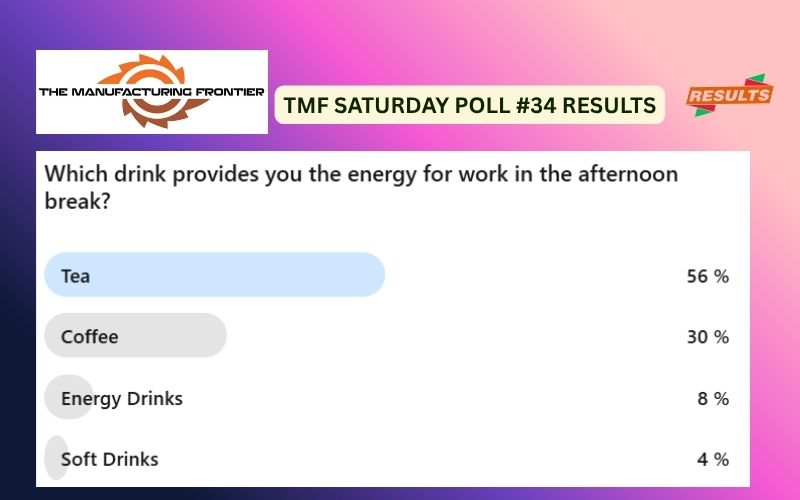
In our latest TMF Saturday Poll, we asked our community a light-hearted yet deeply telling question: “Which drink provides you the energy for work in the afternoon break?”
The results are in, and they paint a fascinating picture of workplace culture and energy habits across the industry:
🍃 Tea: 56%
☕ Coffee: 30%
⚡ Energy Drinks: 8%
🥤 Soft Drinks: 4%
Here is our editorial breakdown of what these numbers say:
The Undisputed Reign of the “Chai” or Tea Break: Securing a massive 56% of the vote, tea isn’t just a beverage on the manufacturing floor—it’s an institution. Whether it’s a traditional cutting chai, a robust builders’ tea, or a calming green blend, tea represents more than a caffeine hit. The ‘tea break’ is a deeply ingrained social ritual. It offers a structured moment of pause, allowing shift workers, engineers, and floor managers to step away from the machinery, decompress, and connect with colleagues. It suggests that for the majority, afternoon rejuvenation is as much about mental camaraderie as it is about physical energy.
Coffee Holds the Line for High-Octane Focus: Coming in at 30%, coffee remains the go-to fuel for a substantial portion of the workforce. For the technical problem-solvers, planners, and operational leaders who need immediate, sharp cognitive focus to power through afternoon metrics and production deadlines, a strong brew is the ultimate tool. Coffee drinkers in manufacturing mean business—it’s about sustained alertness and driving efficiency when precision matters most.
The Shift Away from Artificial Visual Visuals: Interestingly, Energy Drinks (8%) and Soft Drinks (4%) barely made a dent, combining for just 12% of the total vote. Despite the massive commercial marketing of high-sugar, high-caffeine energy drinks targeted at industrial workers, the data shows a clear preference for natural, traditional hot brews. Modern manufacturing professionals are increasingly health-conscious, recognizing that while sugar and synthetic caffeine offer a quick spike, they inevitably lead to a nasty production-floor crash later in the shift.
The Executive Takeaway: The Power of the Pause: What does this mean for manufacturing leadership? The overwhelming preference for tea and coffee highlights the undeniable value of the traditional break room culture. Providing high-quality tea and coffee stations isn’t just a minor perk; it is a low-cost, high-return investment in worker morale, safety, and productivity. By fostering an environment that respects and elevates these afternoon rituals, facilities can ensure their teams return to the floor refreshed, focused, and aligned.
By the way, our next poll is now open. Cast your vote at this link:
https://www.linkedin.com/posts/tmfsaturdaypoll-automation-industry4-ugcPost-7463586880199192576-ZWze/?utm_source=share&utm_medium=member_desktop&rcm=ACoAAAKdKgsBEnnsJn6AZgH975vaADYrlq_xxoI
